

UPDATE:these photos are from last week.
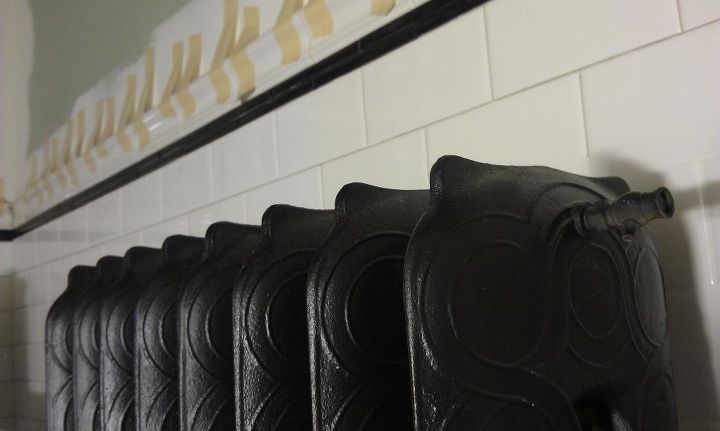
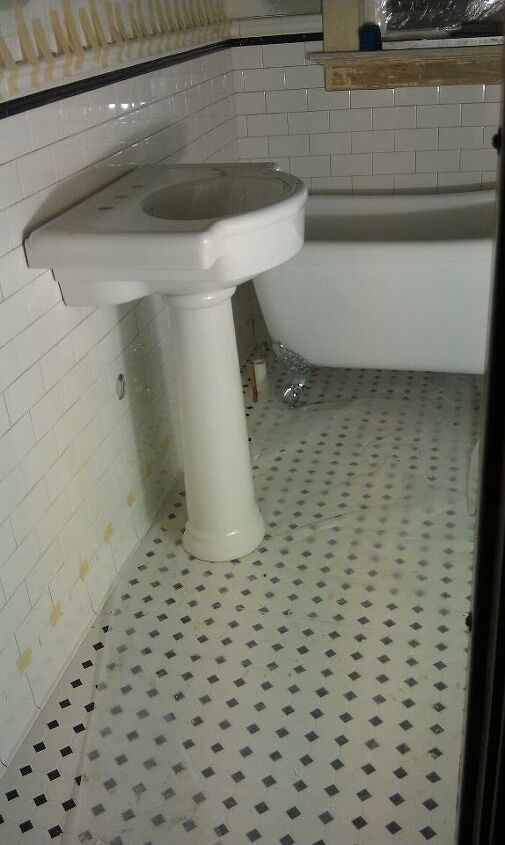
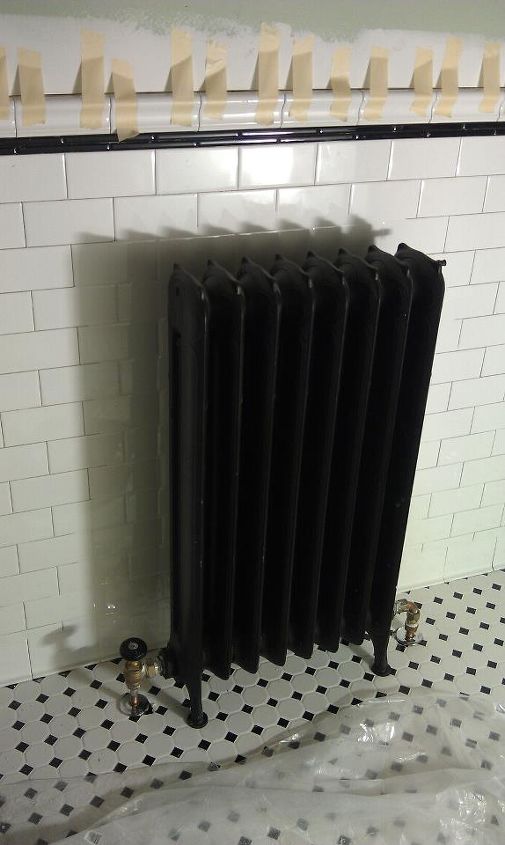
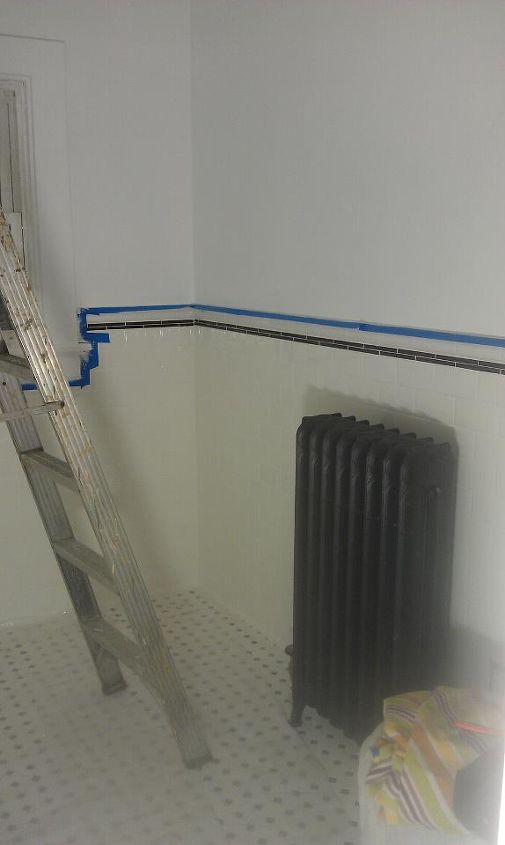
I am actually going to be painting the bathroom today and will post pictures then!!!:) Showing the radiator that we had sitting in the attic that we think originally came from the bathroom before they remodeled in the 50's. We had it refinished and it's very exciting to see it in the bathroom now:)
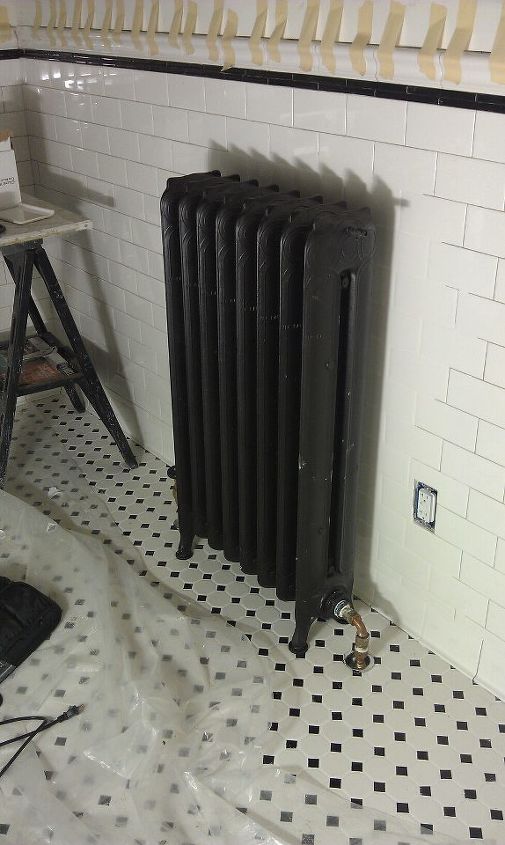
A big mistake people make when renovating their homes and not doing insulation as part of this, is when they decide to convert to baseboard heating. There is no mass thus no ability to deliver heat once the water source is turned off. The result as soon as the water is off, the room cools down.
But with this great system in place comes a difficult issue when it comes time to insulate your walls. Once you do this there is no more need to have this amount of extra stored heat. The results oftentimes causes the room(s) to overheat making them to hot. Which results in windows opening and closing all in an effort to make the room more comfortable.
The fix sometimes depends upon the type of piping system that is installed. a Mono-Flo system employes a continued loop of hot water that can bypass a radiator or a zone of heat by turning off a single valve. The piping system continues to allow water to flow throughout the rest of the home, but only to the rooms that are calling for heat. This allows the radiators to be zoned and controlled by different thermostats. Much like having many heating systems instead of just one.
Not all systems are piped in such a manner, but when they are simply installing a zone valve in each room with its own thermostat makes for a very comfortable room and home.
When did someone first begin making and utilizing radiator heat?
Again it all has to do with mass. With modern homes we do not need to keep the radiators hot as long because of insulation and modern building methods. But many people like the look of the old type of heat so manufactures are producing them today with a modern performance built in that fits ...»
While there are still old style units available. They are very expensive. We used to throw them away when we did heating conversions many years ago, simply for the scrap metal value. But because they are making a big comeback with everyone wanting homes that their grandparents grew up in many are selling them to companies that refurbish these units to sell back to those who want them.
Radiator heat from what I understand was around in the late 1800's at least. I did a little research on this and found a old House and Garden copy that offered up some neat information about home products and such. Many of these companies products are seen a lot on older homes.
http://books.google.com/books?id=yRkgAQAAMAA...
You need to attempt to remove as much of the older paint as possible. This oftentimes requires the radiator to be removed so it can be worked on where sanding tools such as wire brushes on drills can be used. ...»
Once you have cleaned off as much of the paint that you have. Then using High Heat spray paint, repaint them. While you can use normal brush on, you need to be sure that you do not put it on to thick. Which results in those cracks that you see. When you paint over existing paint you even need to put it on even thinner.
Hope that helps.
check out my blog if you want: the cheeky crow (on weebly)