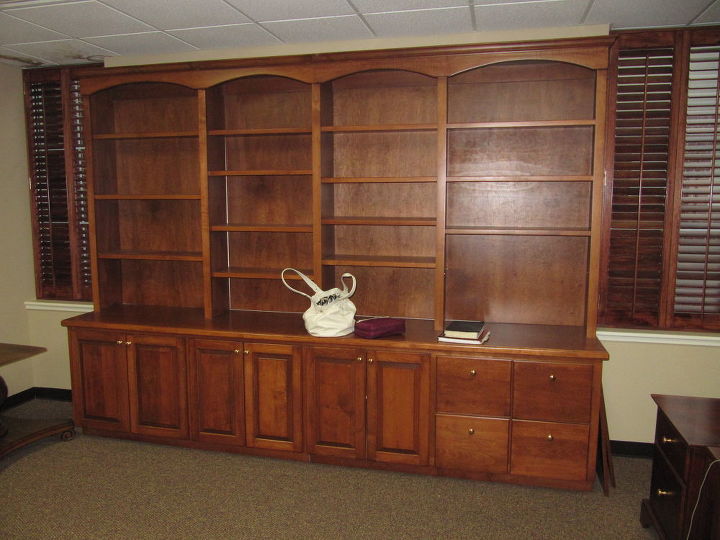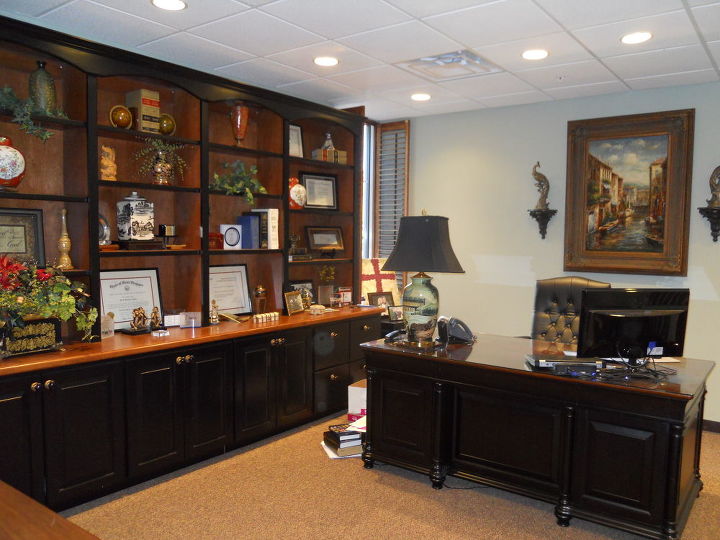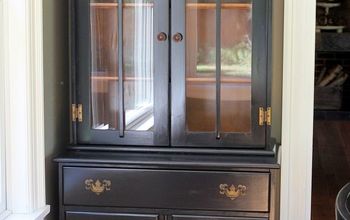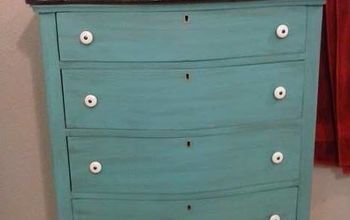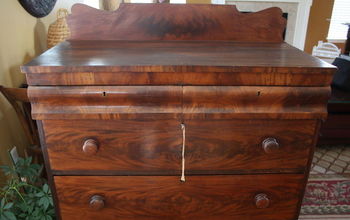

Thank you for all of the kind words. Jamie, you are wonderful & thank you for the instructions. Project style, Jamie & Charles Peace are the ones to ask on this one, I had painters do it for me. I left the counter surface the wood color, which proved to be a good decision because the office liked the look & did another bookcase in the same black, but painted the counter surface and it is scratching badly, I left my stained & sealed & am having no trouble. I bought the porcelain knobs at Hobby Lobby.
To paint over stained and varnished wood work, the sheen needs to be dulled and the surface cleaned.
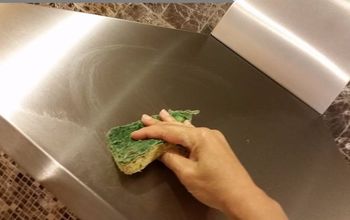
A typical way to do this is to scuff it up with a fine sanding sponge. This will dull the finish for adhesion and smooth out any existing roughness.
Then vacuum off the dust and wipe over the surface using a rag and denatured alcohol. This
...»
will remove the fine dust and any contaminants such as furniture polish, etc. In some cases, we use deglosser if I suspect there are other stubborn kinds of oil, wax, etc. present. The deglosser can alone be used to dull and clean the finish. We will do this if the finish is very smooth already. There are lower toxicity water based deglossers available now.
Now you are ready for a coat of kilz. For the smoothest finish and a guarantee to never chip off, use oil base. The reason for all these precautions is that varnish is much harder than paint, so paint will chip off easily if not prepared properly. You have probably seen peeling/chipping paint over stained trim work when it gets bumped.
Once you prime, you will see the imperfections the stained surface did not show you, so you are ready to wood fill nail holes and do some caulking before apply at least two coats of finish paint for complete coverage.
These are the basics of painting over stained trim.
I enjoyed looking at these pictures because of the combination of painted and stained surfaces. This project was alot of work, It would be easier to paint the whole thing. I'm pretty sure more than one roll of blue tape was used to protect the surrounding stain, but it looks like a classy piece of furniture when it's finished.
@Miriam I... I promise I will put a picture of the desk project on here in the next week or so. I am just putting the finishing touches on it and the last pieces aren't attached yet. Stay tuned.
@Jaime - thanks for the detailed instructions! We have acquired some small case pieces that we are thinking about repurposing. Your information will definitely come in handy!

It also made the shutters and windows pop out more. My husband is a purist when it comes to wood (never ever paint) but I appreciate the contrast and beauty that comes with a job like yours.
A typical way to do this is to scuff it up with a fine sanding sponge. This will dull the finish for adhesion and smooth out any existing roughness.
Then vacuum off the dust and wipe over the surface using a rag and denatured alcohol. This ...»
Now you are ready for a coat of kilz. For the smoothest finish and a guarantee to never chip off, use oil base. The reason for all these precautions is that varnish is much harder than paint, so paint will chip off easily if not prepared properly. You have probably seen peeling/chipping paint over stained trim work when it gets bumped.
Once you prime, you will see the imperfections the stained surface did not show you, so you are ready to wood fill nail holes and do some caulking before apply at least two coats of finish paint for complete coverage.
These are the basics of painting over stained trim.
I enjoyed looking at these pictures because of the combination of painted and stained surfaces. This project was alot of work, It would be easier to paint the whole thing. I'm pretty sure more than one roll of blue tape was used to protect the surrounding stain, but it looks like a classy piece of furniture when it's finished.
Best, Charles
Then you are ready to prime. Oil base primers and paints wear better and look nicer but are more aggravating to use.
After you prime, you probably want to caulk and putty the cracks and holes to look nice.
A small fuzzy roller can be used on the wide surfaces to make the job go quicker and get even ...»
Feel free to ask some more if you need to.
Best, Charles