« View Post
Photos

Oops! Leave without saving?

If you leave this page, the information you have entered will not be saved!
Are you sure you want to leave this page?

Leave this page Stay on this page

Hometalk.com

  • Sign Up
  • or
  • Log In
  • Professionals
  • Community
    • All Members
    • Professionals
    • Bloggers
  • About
    • About Hometalk
    • Blog
    • FAQ
    • Guidelines
    • Resources
    • Support
    • Press
    • Contact
    • Terms of Use
    • Privacy Policy
  • Following
  • All Topics
    • Cleaning & Organization
    • Crafts
    • Design & Décor
    • DIY Projects
    • Gardening
    • Home Maintenance & Repairs
    • Outdoor Living
    • Painting
    • Remodeling
    • Repurposing & Upcycling
    See More Topics »
  • Questions
    • All Questions
    • Open Questions
    • Unanswered Questions
  • Clips
Post & Ask
Join Now Log In

Hometalk is where people share and help with everything home & garden

0
Julie F
Julie F Hobe Sound, FL on Jul 10, 2012
Like Clip

DIY install of laminate flooring

My husband and I are installing laminate floors over tile..any advice?
  • Like Clip
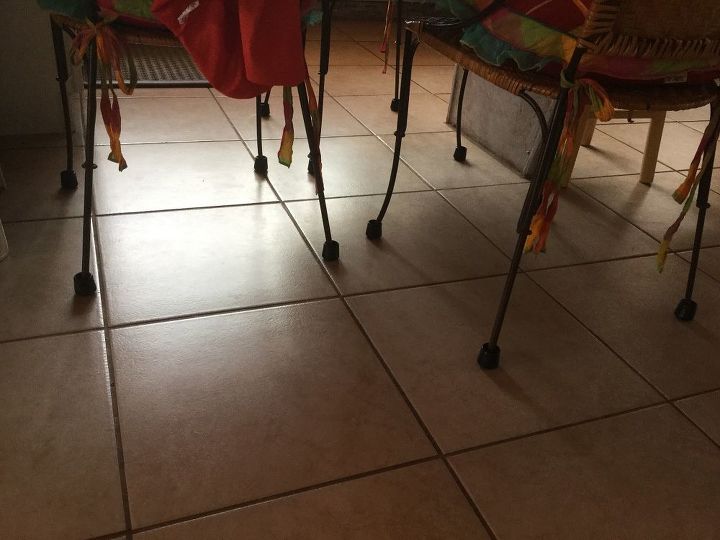
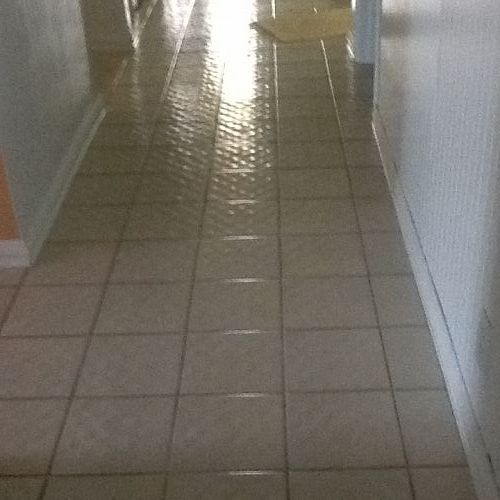
    existing tile floor
Post Comment | Like | Clip | Share
374 Views
3 Comments
  • Tony S Lawrenceville, GA
    The best advice (and perhaps the most import advice) is to remember that a laminate floor actually "floats" and is not secured to its substrate; tile in your case. Therefore, it is very important that you follow the manufacturers guidelines relating to the gap that must be maintained between floor and walls. The floor must be able to expand and contract with seasonal changed.

    Make sure you purchase the Laminate Floor Installation Kit that consists of a plastic ...»

    (impact-resistant) bar and special metal pry-bar. DO NOT try to use a scrap of wood, chisel, pry-bar, etc, when installing your floor. The flooring material is extremely brittle. The plastic installation bar has just enough "spring" to allow you to nudge planks into place without breaking off the specially shaped edges that mate the whole floor system into a nice seamless system. Always use a Rubber Mallet during installation; never a steel hammer.

    Making sure the first row is perfectly straight is absolutely critical. Don't be afraid of it not being perfectly parallel with the wall. Anyone who has spent even a little time installing floors knows that there is no such thing as a straight wall. But I digress... If your first row is not perfectly straight, the effects will show up on every subsequent row with misfitting planks, gaps, etc.

    If the tile you are covering is installed on a concrete slab, do yourself a favor and test for moisture evaporation from the floor. This is very important when selecting a proper vapor barrier to be placed under your new laminate. To do so, tape a 24" x 24" piece of clear plastic to the tile floor and watch it for a few days. If condensation forms under the plastic, you have a moisture vapor intrusion problem that must be addressed before installing your floor. To ignore the problem will result in your new floor buckling, delaminating, etc., as the moisture tries to escape.

    on Jul 11, 2012 · Like 2
  • Miriam I New York, NY
    Here's a similar question with some more tips: http://www.hometalk.com/18426/what-are-some-...
    on Jul 12, 2012 · Like 0
  • KMS Woodworks Nederland, CO
    As many folks here on hometalk know, I not much of a fan of laminates. laminates occupy the bottom rung in the flooring spectrum. From a durability stand point and long term ease of use tile...is the best. With real hardwoods taking the next position.

    Nearly ever laminate floor I have seen looks pretty nasty after just a few years...and these were installed by pros on virgin "substrate". As mentioned above laminates float and are not bound to ...»

    the substrate...this is one reason why they sound hollow and have a "clackity clack": sound underfoot. Even with a decent vapor barrier / foam underlayment the minor unevenness of a tile floor will exacerbate this issue.

    What room is this? living room or bedroom? Kitchen. If this is for a kitchen or any area that have potential for moisture exposure...tile would be the better choice hands down. Laminate are only water resistant on the top "plastic" layer the seams and the back are often made from MDF and this swells when exposed to water...often never to return to its original thickness...this swelling is the primary cause of failure.

    On a final note ...when a laminate floor starts to fail or look nasty there is no "fix" available. A real hardwood floor can be re-surfaced / sand and provide 100 years + of service life if maintained well....when the laminates life is up...in 3 to 5 years its landfill fodder...laminates can not be recycled composted etc like real wood.

    on Jul 13, 2012 · Like 0

NOTE: You can drag and drop your photos to reorder them
Required
Comment Saving...

Related Posts

  • Stencil Your Floor with our Shipibo Stencil
  • Painted Vinyl Floor update
  • Flooring for Under $100

Related Topics

Flooring

Recent Questions »

  • Cindy June 55
    Any ideas for painting a plywood s...
    2 days ago 17 answers
  • Frankie Laney
    I knew I should have taken a different rout...
    13 seconds ago 43 answers
  • Heather Benton
    One Lonely Iris
    10 minutes ago 13 answers
  • Have a question?
    Ask now & get answers»
Back
to top
Feedback