

« View Post
Photos

Oops! Leave without saving?

If you leave this page, the information you have entered will not be saved!
Are you sure you want to leave this page?

Leave this page Stay on this page

Hometalk.com

  • Sign Up
  • or
  • Log In
  • Professionals
  • Community
    • All Members
    • Professionals
    • Bloggers
  • About
    • About Hometalk
    • Blog
    • FAQ
    • Guidelines
    • Resources
    • Support
    • Press
    • Contact
    • Terms of Use
    • Privacy Policy
  • Following
  • All Topics
    • Cleaning & Organization
    • Crafts
    • Design & Décor
    • DIY Projects
    • Gardening
    • Home Maintenance & Repairs
    • Outdoor Living
    • Painting
    • Remodeling
    • Repurposing & Upcycling
    See More Topics »
  • Questions
    • All Questions
    • Open Questions
    • Unanswered Questions
  • Clips
Post & Ask
Join Now Log In

Hometalk is where people share and help with everything home & garden

3
Find me on g+
Home Repair Tutor
Home Repair Tutor Blogger Pittsburgh, PA on Aug 28, 2012
Like Clip

Bathroom Floor Tile: Prep Work that's Crucial for a Gorgeous Look

Who doesn't like a great looking bathroom floor? They're resilient and add flavor to one of the most important spaces in any house. We added porcelain tile to a bathroom that originally had blue carpet (that's right, BLUE carpet !!) Prep work is crucial to prevent cracked tile and extend the life of your transformation. Here's a summary of some notes (on prep work) I took from an installation we did a few weeks ago.

+Check the wood subfloor for water damage around the vanity, toilet and bathtub

+Replace wood subfloor panels that are warped and rotted

+Ensure the floor is level

+Secure any loose and squeaky wood subfloor panels using 2 inch deck screws

+Fix peaks less than 1/8 of an inch by sanding them down

+Fill in valleys using self leveling compound ...»

For more details and some pictures visit http://www.homerepairtutor.com/install-bathr...

If you have any tips you'd like to add please do so :)
  • Like Clip
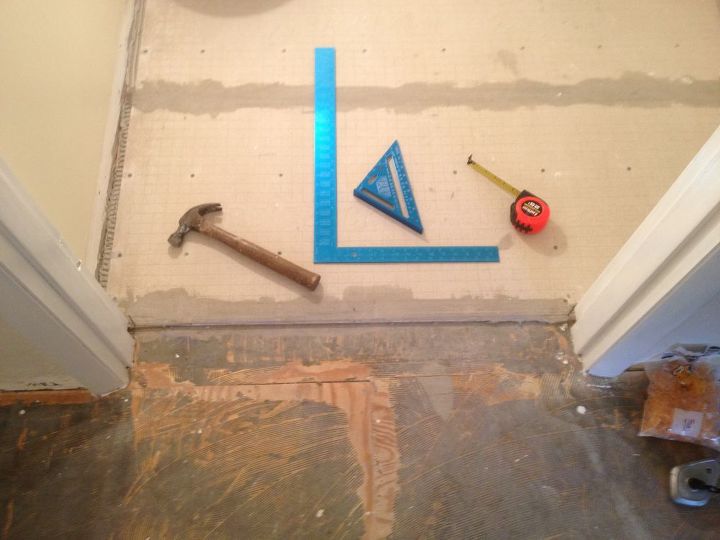
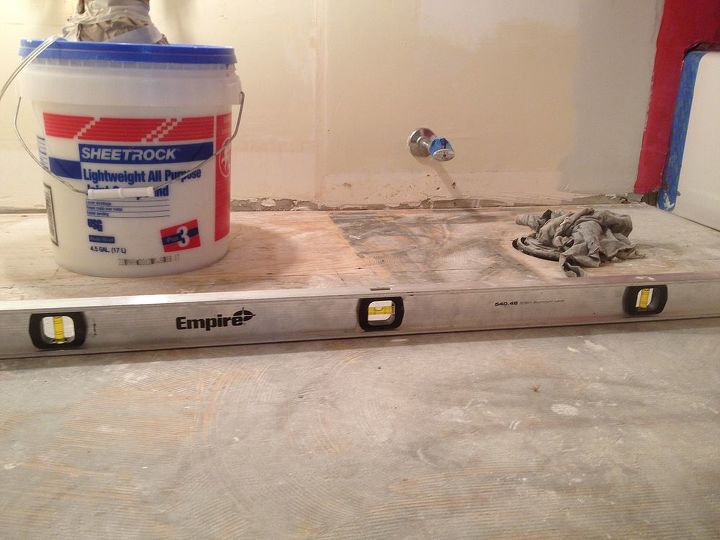
    The right prep for tile floors is simple and straight forward. Use a level, hammer, drill, deck screws, leveling compound to help with the process
  • Like Clip
    1
    And buy some knee pads, you'll be on the floor a lot :)
Post Comment | Like | Clip | Share
2862 Views
14 Comments
  • Marilee H Youngstown, OH
    Thanks! We will be starting a bathroom remodel in a couple of weeks, so I'm looking forward to the rest of the tutorial.
    on Aug 30, 2012 · Like 1
  • Bill Fayetteville, GA
    Add a water barrier (can leave intact a vinyl floor if in good shape instead) on top of the subfloor. Then cover with cementious backer board and generously fastened with deck or drywall screws on which to lay the tile. Tile applied directly to any wood subfloor is subject to cracking from the start.
    on Aug 30, 2012 · Like 0
  • Originals by Rhonda Walnut Cove, NC
    YOU AIN'T DONE YET?! lol... Bill has some workable suggestions. Personally I don't like to cover over old materials, plus removing them will give you insight to any underlaying issues (rotted wood, insect damage, lack of prior nailing of subfloor, etc.

    The extra thickness of old vinyl along with a water barrier would just be an added thickness to deal with at your threshold and keeping your floor height kept down to a minimal will be safer ...»

    against toe-stumping and having the need to use an inch to 1 1/4" threshold. I wanna see when you're done!

    on Aug 30, 2012 · Like 0
  • Home Repair Tutor Pittsburgh, PA
    This is a great discussion. Thanks Marilee, Bill, and Rhonda for your comments. I agree with Bill that a good cement backer board is key to a great tiling job.

    I also address your question Rhonda about transitioning with the adjacent room. This is a REALLY BIG concern when doing tile work. I have a nice video in my new blog post that discusses this issue. You can check it out at http://www.homerepairtutor.com/how-to-instal... ...»

    Boy, I really enjoy all the wonderful questions on Hometalk. Keep them coming :)

    on Sep 01, 2012 · Like 1
  • Bill G Lodi, CA
    It seems the backer board used in the photo is less than 1/2" thick, I was under the impression that this was used for wall tile and 1/2" used for floor tile to aid in strength and aid against cracking due to stepping on the floor tile sub-floor flex.
    on Sep 02, 2012 · Like 1
  • Originals by Rhonda Walnut Cove, NC
    Bill the backer 1/2" or 1/4" either can be used on a floor. It is the Combination of the backer and subfloor that give the strength and intregity. Usually a wood subfloor is roughly 3/4" plus whatever thickness backer you install.

    I will use the 1/4" for reasons like keeping a kitchen floor low enough for a dishwasher to re-install or keeping floor low at a threshold or to level floor with an adjoining floor. ...»

    If I walk on a customers floor and bounce and the floor flexes I will use the 1/2" to add stability (ALWAYS THIN-SET AND NAIL OR SCREW BACKER APPROX. EVERY 6") and sometimes a floor may need extra support beneath. I did a 24"x24" floor once and had the customer to get an engineer in to make suggestions on strengthening the floor because of the massive open space and the weight I would be installing on it :)

    on Sep 03, 2012 · Like 0
  • Originals by Rhonda Walnut Cove, NC
    BTY Bill ...the Only time I use backer on wall is if it needs built out, if the tile is very heavy, if I'm installing stone or there is no sheetrock or if I will be installing directly over wall studs. If I install on studs I use 1/2". I have used the 1/4" over rough sheetrock, especially on a splash after tearing out old tile.
    on Sep 03, 2012 · Like 0
  • Bill Fayetteville, GA
    Apparently Rhonda and I differ on protecting the subfloor, but my recommendation is a water barrier of some type. Bill G- Leaving the vinyl serves this purpose and adds only about 1/16",which you can adjust out with your thinset thicknes if necessary, but if your floor is rotten, you'll need to replace the subfloor and in some cases, scab your joists. Use a nail to get 1/8" gap between each backerboard edge and seal well with silicon caulk. Then apply thinset on top to attach your tile.
    on Sep 03, 2012 · Like 1
  • Mark Potter Lagrangeville, NY
    mmm?... confused, backer board or any other cbu holds no substraint for tile, it's a filler for better tile bond over plywood which is your substraint. 1/4" cbu is for flooring & 1/2" for walls and does not get attached to drywall.
    on Sep 05, 2012 · Like 1
  • Originals by Rhonda Walnut Cove, NC
    Hello Bill from GA, I'm not sure of your professional background, but I have professionally installed tile and stone for over 20 years and I will asure you that leaving OLD VINYL will Not act as a water barrier. I work in many highend homes and I NEVER cover over old crap. I have to guarantee my work so I remove Everything down to the wood, do an inspection and clean and prep everything and then install my tile.
    on Nov 23, 2012 · Like 0
  • Originals by Rhonda Walnut Cove, NC
    Mark I am not sure what you mean by substraint, maybe substrate? Both 1/4" and 1/2" Cement Board (underlayment) can be used on floors or walls. It also CAN be installed over sheetrock (drywall) just depends on the requirements necessary to make the job work.
    on Nov 23, 2012 · Like 0
  • Bill G Lodi, CA
    I'm with Rhonda on getting the old vinyl out, you need to see what's under there before you lay a rigid surface down, you can't guarantee it if you don't know what's under it! Thanks Rhonda for the explanation with examples on the backer types, I'm more of a jack of all and master of study more, there's always more to know! :)
    on Nov 25, 2012 · Like 0
  • Mark Potter Lagrangeville, NY
    Rhonda, 1/4' cbu are required for floors and 1/2' for walls, cbu is just a tile bond filler so 1/4 is plenty if you up it to 1/2' you will risk movment because cbu hold no stucture aka substrate between subfloor and tile. angain if you go over sheetrock with cbu board your chances of movment ar increased and IMO competly piontless to do.

    also to set the record if you leave and tile over vinyl you will get a mold sandwich and no thinset will adhere to vinyl anyway.

    on Nov 28, 2012 · Like 0
  • Mark Potter Lagrangeville, NY
    Rhonda, Please at no affence do not give advice about subflooring cbu or any backerboard hold any support for tile its just a filler TCNA handbook tell you this along with cementboard recomendations. most tilers will tell you 1" of ply correctly put down and set is what should be addiquite for subfloor strainth.
    on Nov 28, 2012 · Like 0

NOTE: You can drag and drop your photos to reorder them
Required
Comment Saving...

Related Posts

  • Preppy Striped Bathroom
  • Frame Out Your Builder's Grade Mirrors...No Mitering Required!
  • bathroom shower curtain idea!
  • 5 Likes

    Cathie J Cadman Martina D Sharron W Jackie W Peggy

Clipped to 14 Boards »

  • Carolyn Hartzler
    carhartz
    by Carolyn Hartzler
  • KellyS
    Bathroom Ideas
    by KellyS
  • Ally
    Bathroom
    by Ally

Related Topics

Bathroom, Flooring, Tiling

Recent Questions »

  • Kathy Portie
    Miracle Method Bathtub Refinishing
    34 minutes ago 6 answers
  • Rose S
    Pink 1960 bathroom??
    7 hours ago 8 answers
  • Have a question?
    Ask now & get answers»
Back
to top
Feedback