

« View Post
Photos

Oops! Leave without saving?

If you leave this page, the information you have entered will not be saved!
Are you sure you want to leave this page?

Leave this page Stay on this page

Hometalk.com

  • Sign Up
  • or
  • Log In
  • Professionals
  • Community
    • All Members
    • Professionals
    • Bloggers
  • About
    • About Hometalk
    • Blog
    • FAQ
    • Guidelines
    • Resources
    • Support
    • Press
    • Contact
    • Terms of Use
    • Privacy Policy
  • Following
  • All Topics
    • Cleaning & Organization
    • Crafts
    • Design & Décor
    • DIY Projects
    • Gardening
    • Home Maintenance & Repairs
    • Outdoor Living
    • Painting
    • Remodeling
    • Repurposing & Upcycling
    See More Topics »
  • Questions
    • All Questions
    • Open Questions
    • Unanswered Questions
  • Clips
Post & Ask
Join Now Log In

Hometalk is where people share and help with everything home & garden

17
Find me on g+
Great Home Painting
Great Home Painting Professional Morrisville, PA on Jan 24, 2013
Like Clip

MILDEW IN THE BATHROOM

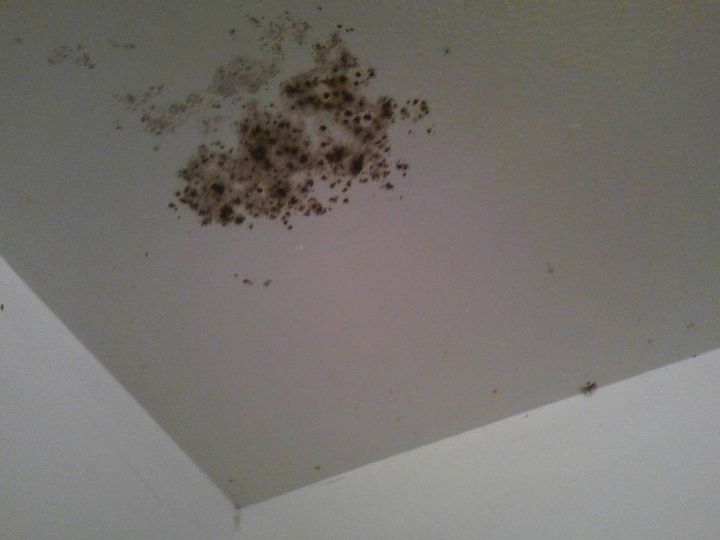
Q: The paint in our hall bath always peels. Was the ceiling not properly primed? Now we are getting mildew in the bathroom on the ceiling and walls. What should we do?

A: This is a pet home repair project of mine. Paint peels for only a couple of reasons.The primary reason is moisture. The steam from the shower rises and stays on the ceiling. It is critical that the exhaust fan be in use with every shower.

I recommend connecting the fan to the light.That way the fan goes on every time the light goes on. Also check the fan that it is clean and effective in removing the steam.The mildew is created by moisture in a dark environment. Use bleach to remove the mildew from tile. You may have to replace the sheet rock in the ceiling and walls.

More info.... http://greathomepainting.com/Home-Improvemen...

Difficulty: Moderate
  • Like Clip
    The number one defense against mold is good ventilation. Opened windows and a good flow of fresh air are great, but not always practical--for instance, i...

  • Like Clip
    On porous surfaces such as sheetrock, if the mold is imbedded in the substrate, the material will have to be removed and replaced in order to eliminate...
Post Comment | Like | Clip | Share
7436 Views
23 Comments
  • Ethan@OPC Catonsville, MD
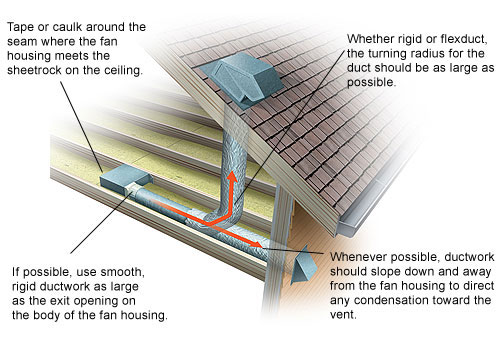
    Great tips, and people should check if their bathroom fans vent outside the house or just into their crawlspace / attic. A lot of people I know discovered that the fan put moisture into the attic and onto nearby insulation.
    on Jan 24, 2013 · Like 1
  • Great Home Painting Morrisville, PA
    Great tip Ethan. Moisture on the insulation could create more mold and mildew, the exact thing we want to prevent. It can also cause wood rot. If the fan DOES NOT vent out side the house, what would be some of the solutions? Attic/gable fan? De-humidifier?
    on Jan 25, 2013 · Like 0
  • Lisa M Atlanta, GA
    My daughter lives on the bottom floor of a 2-story condo--apts. turned into condos. Her bathroom doesn't have a vent fan and where would it be vented to? She's got a mildew problem. Any suggestions?
    on Jan 25, 2013 · Like 0
  • Terri J York, PA
    When we were hit with the tornado that landed less than three miles from my house, I noticed the high windes was causing a little water to come in via the vent. Now, I have notices a slight water stairn on my bedroom ceiling as an after affect. I have never gone into the attic to investigate, but after reading this, I most certainly will. Pray I don't find mold, b/c then it really may be time to hire a bull dozer.
    on Jan 25, 2013 · Like 1
  • Woodbridge Environmental ... Colonia, NJ
    Lisa, if she does not have a fan, she has a window. That should be opened just a crack on the top to allow the moisture to escape.

    When sidewall venting fans it is not suggested as we used to do to vent out from the soffit area. This creates a pressure in the duct preventing it from properly working on a breezy day.

    Ethan is correct also. Be sure to vent system out of attic. Insulate pipe with at least R-6 ...»

    and pitch it one way or the other. Ideally outwards, but in most cases it ends up being pitched in towards the fan. Regardless of what way its pitched. Just do not allow it to go up and down where moisture can collect in the pipe should it condense in colder weather.

    on Jan 25, 2013 · Like 1
  • Terri J York, PA
    @Woodbrige - that is how my vent is - thrrough the "attic", and it is pitched outwards from what I can see on the ground. Read my above sttement - and tell me what you think,. @Ethan and Great Home Painting, thanks fo the original information to begin with...I am just hoping and praying it's not to late. The wet spot is dry on my cieiling and not spreading. I already had to redo the bathroom walls once from a tenant who never used the vent, but thankfully, there was no evidence of mold or mildew.

    on Jan 26, 2013 · Like 0
  • Woodbridge Environmental ... Colonia, NJ
    Terry J, you will find most vents are sidewall discharged, some from soffits and the rest out the roof. You can only tell if the pipe is correct once you get into the attic.

    Several are vented using the same material that they used to use in dryers. That white plastic garbage. While this may be fine in the warmer areas of the country, in he PA area as in my area NJ we get to cold not to insulate those pipes. ...»

    You need to check in the attic to see if the vent has a steady pitch to it. Either pitched towards the inside of the house, or pitched ideally towards the outside of the vent blower. This prevents water build up within the pipe should it get cold enough to condense the vented moisture up and out of the attic.

    on Jan 26, 2013 · Like 1
  • Melissa Gutilla Stephens City, VA
    I have read several articles about the vents coming loose from the attic ceiling where it is connected. We just put on a new roof and my brother made sure everything was hooked up correctly and properly caulked around. I would think if the outlets on the ceiling were left uncaulked they would allow water to run back into the house down the vent itself. We also have a vent in our basement bathroom that was vented into the ceiling itself. We plan on having it vented out the wall come ...»
    spring but when my husband takes a shower in it he leaves the bathroom door open for now. We have a lot of things to repair and fix when spring arrives.

    on Jan 26, 2013 · Like 0
  • Debbra mansfield Columbus, OH
    vinegar is another alternative to cleaning over bleach - non-toxic & a natural disenfectant and mildew killer.
    on Jan 26, 2013 · Like 2
  • Joyce Flom Billings, MT
    I googled mildew a week ago because there was mildew on our basement windows and shower stall. They told me how to mix white vinegar to clean it or it would come back. Glad to see all these comments!
    on Jan 26, 2013 · Like 0
  • Warren W Maywood, NJ
    Bleach, vinegar and don't forget just plain old hydrogen peroxide is very effective and probably the cheapest of them all
    on Jan 26, 2013 · Like 1
  • Debby Gentry Wylie, TX
    Has anyone tried Kilz on mildew on sheetrock?
    on Jan 26, 2013 · Like 1
  • Woodbridge Environmental ... Colonia, NJ
    Please understand,. Not all molds are killed by vinegar. It will remove it physically from what ever your cleaning, but most molds are NOT killed by this product. In addition bleach also does not kill all molds. It bleaches the mold making it harder to see making people think they have killed it. It will kill some types but like vinegar not all. Hydrogen Peroxide does do a much better job, but can stain the materials it comes into contact with. Many mold removal companies use Peroxide as ...»
    the primary chemical to clean up a fungal issue.

    Debby Gentry, Kilz has Microban chemical in the product. What this does is not kill anything, but create an environment in which the mold cannot thrive. Sort of like a pre-treatment to prevent weeds from growing in the yard. It creates a hostile surface that will not allow mold to grow. If you have anything on a Sheetrock wall and it cannot be simply wiped away and painted, you should ideally remove the drywall and replace. Think of mold having roots, what you see on the surface is minor as what is growing in the material in which it is found. Protocol requires mold removal to include any surface that cannot be thoroughly cleaned to be removed and discarded. Drywall, plaster etc is one of those materials.

    Most mold found on ceilings of baths as an example ideally should be removed and replaced. You can get away by cleaning the surface and painting with a Kilz product, however if you do not prevent the moisture the mold will return much faster then it would had you removed the suspected surface and replaced.

    on Jan 27, 2013 · Like 2
  • Joyce Flom Billings, MT
    Thanks! Nice to have the input from you. Back to the drawing board for me! I've never had this problem before and driving me nuts!
    on Jan 27, 2013 · Like 0
  • Woodbridge Environmental ... Colonia, NJ
    Joyce Flom I have a few questions for you as you said your basement windows are condensing moisture and mold is appearing on them.

    1st off the mold your finding on your windows can easily be cleaned off using a good detergent cleaner. Or something that you would use to disinfect your counters.

    But I have a larger concern here. And that is the moisture. ...»

    If your basement windows are suffering from condensation you have a moisture issue that needs to be looked into. The elevated humidity in a basement is a sign of a few things. A basement that has an issue with water coming in from the outside. A dryer vent that is not properly fastened tight allowing some of the vented moisture to escape into the basement, A leak in plumbing that your not aware of, or most important a plugged chimney on a gas appliance.

    When a gas furnace or appliance operates it produces moisture and a lot of it. If the venting system for that appliance is faulty you risk CO2 and elevated moisture levels.

    So please check to see if there is any draft spillage assuming you have gas appliances in the basement of the home.

    So on the moisture side of things, you need to find where it is coming from and try to correct this. If the shower is located in the basement, is it properly being vented? Lots of things cause moisture. But if you do not know where it is coming from and you have a gas burning appliance in the basement, please check its operation just to be safe.

    When cleaning mold one must understand the material it is growing on. Mold needs something organic to grow on. It will not simply take up shop on a plastic panel, a tile, cement wall, glass etc. However many people see mold on these products and wonder why? Think of the side of a rock wall along the highway. You see trees and plants and all sorts of growing vegetation. These plants are not growing out of the rock, it offers nothing to them as far as a food source. It is because the nooks and crannies in the rock as allows for organic material to develop on the surfaces in which these plants thrive.
    The same goes with the non-organic surfaces in a bath room or kitchen. These materials are holding an organic material on its surface. In the example of a tile or plastic shower/tub surround it is the soap film that collects on the surface of the tile that allows mildew to develop. So cleaning these surfaces will remove the mold. However you must understand if you use an abrasive cleaner on the surfaces you will soon develop micro scratches that eventually dull the surface, but more so make the surface more acceptable to holding the organic materials that allow mold to develop. So using comet to clean on a plastic surface although will work well, it is not the type of product you want to use.

    On a tile surface the important concern here is the grout. This porous surface as well as some tiles used today, needs to be properly sealed to prevent the organic build up of soils and soap that allows for mold to develop. Sealing is not only about moisture to to help prevent soap and other materials from attaching themselves to the surface that allows the mold to develop.

    on Jan 27, 2013 · Like 1
  • Barbara Seagrave
    We have a log home so we don't have sheetrock for walls. Our ceiling and walls are cedar log with a varnish on them and we have mold that we can't get rid of. We also can't put in a fan. Any thoughts for removing mold on cedar?
    on Jan 27, 2013 · Like 0
  • Woodbridge Environmental ... Colonia, NJ
    Cedar logs that are exposed presents a special problem. Because the wood is organic the mold can easily grow into the surfaces. While you can kill off the spores that have grown using Ozone as one method, the bigger issue is the staining. There is nothing other then sanding the surfaces until the stain from the mold goes away. I will contact a few people who know a bit more about this and get back to you on what you can do. ...»

    What room(S) are you having this issue with. Just the bath? Or is is happening in other areas of the house as well? Is there some sort of crawl space or basement below these areas?

    What ever the issue is its not going to be one of those quick fixes that normally is the case with a stick built home.

    Also what type of heat do you have in your house? Hot air, radiators, wood stove? and do you have central AC?

    on Jan 27, 2013 · Like 0
  • Gesele Dreslinski
    My daughter moved into her home about 6 months ago. It's taken 5 months, but leaks appeared in her bathroom fans and in several rooms. After several people looked for a problem, such as an issue with the roof, it was discovered that one of her bathroom fans are not connected to any pipe and the one in her master bath is vented to the roof ridge. That pipe was ripped! Steam collected in the attic crawl space and condensation created pools of water, some of which traveled ed along and ...»
    found her walls. She is having both fans vented to the roof, so we'll see if that corrects the problem

    on Jan 27, 2013 · Like 0
  • Woodbridge Environmental ... Colonia, NJ
    Just be sure they insulate the pipes when they get the vents installed. Otherwise the condensation will travel back down into the fan unit.
    on Jan 27, 2013 · Like 0
  • Barbara Seagrave
    We have the mold in the bathroom and along the high beam of our house which goes into our bedroom. We had a problem with a leaking roof about 5 years ago and replaced the roof. Then we had a problem with moisture when the house was too hot so we now have a form of central air so the upstairs stays cooler and doesn't "sweat". We have staining all along the main beam and coming down on the walls. the house is A frame with balcony bedroom. We have gas radiant heat with an electric heater for ...»
    the balcony. We also use a wood stove downstairs. This heats the whole house.

    on Jan 28, 2013 · Like 0
  • Woodbridge Environmental ... Colonia, NJ
    I did a church a few years ago that had mold at the top of a very large ceiling. it is important that you do ventilate that area either by using fans to move the air around or as you do during part of the year run the ac. What happens is the warm air carries more moisture then the cool air does. And with an A frame house the peak of the ceiling can be as much as 10 degrees or more warmer. Thus more moisture. ...»

    So far all my questions from my group is only method they know of is sand. You can try bleaching the wood to lighten the stains, but there is not much more as of yet that I know of that can be done.

    on Jan 28, 2013 · Like 0
  • Barbara Seagrave
    Thanks for checking into this for us. That's pretty much what we are doing. Ventilating and sanding...
    on Jan 29, 2013 · Like 0
  • Woodbridge Environmental ... Colonia, NJ
    Another way to do this is to use dry ice blasting. its a bit expensive but it will restore the logs to original beauty. The dry ice is shot out of a sand blasting type of device and as the ice hits the wood it breaks down. As it does this it removes a tiny bit of the surface at a time and evaporates away. Some companies use a corncob blaster or soda blaster. Both are used a lot on log homes to refinish the surfaces as it gets into all the tiny spaces on the logs keeping the profile all the ...»
    while doing the sanding needed. Here is a short video of using dry ice vs corncob. http://www.youtube.com/watch?v=AIb2yWvdxJs

    As a mold remedation company we have used dry ice in several homes. The only thing left to clean up is the surface dust that was removed. But for stains on a log and perhaps wanting to restore the beauty of the log home this may be a way of going without all the time sanding takes and the difficulty in doing it.

    on Jan 30, 2013 · Like 0

NOTE: You can drag and drop your photos to reorder them
Required
Comment Saving...

Related Posts

  • DIY Bathroom Vanity Base
  • Turquoise Stenciled Bathroom
  • Bathroom Renovation
  • 5 Likes

    Sandy valencour Cindy buchanan Sharon Hancock-Shipley Tonya L Terri J

Clipped to 22 Boards »

  • Gina Suska
    DIY/Home
    by Gina Suska
  • Cheryl Hicks-Nichols
    DIY HOUSE CARE AND REPAIR
    by Cheryl Hicks-Nichols
  • Meg Henderson
    Home Improvement
    by Meg Henderson

Related Topics

Bathroom, Home Maintenance & Repairs

Recent Questions »

  • Lynne
    How to get rid of well water stains
    21 minutes ago 5 answers
  • P Kirkpatrick
    Cracked patio
    9 hours ago 3 answers
  • Have a question?
    Ask now & get answers»
Back
to top
Feedback