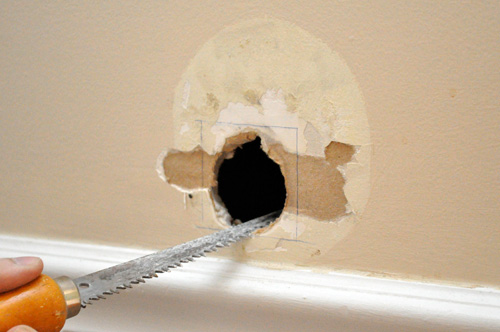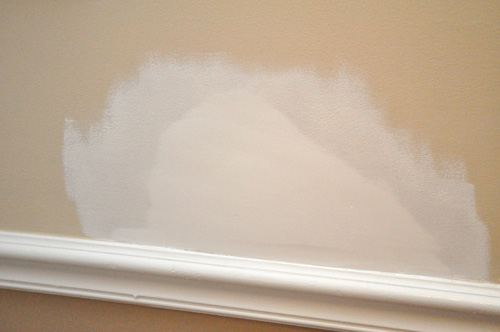

A Flawless Drywall Repair
Time: 2 Hours Cost: $10 Difficulty: Easy
To see more: http://www.oneprojectcloser.com/how-to-repair-medium-size-hole-in-drywall/
23 Comments
-
Ah! This is an awesome tip! -
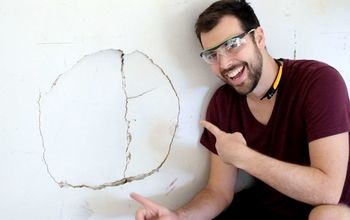
Good summary. I learned the hard way that it makes everything so much easier if you square the hole first. -
It seems counterintuitive to make the hole larger but it really does help. I've also heard a tip to cut the new piece of drywall to the approximate size (but slightly larger than the hole), and then trace it to ensure a perfect fit. -
how do you keep the backer board in place??! -
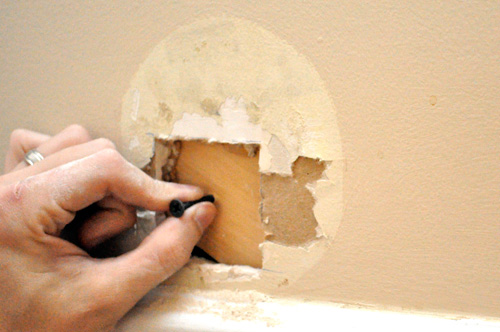
Yep. The backer board stays in the wall and adds strength to the repair. -
Great tip, thanks so much for posting! -
BUT HOW do you keep the BACKER BOARD in place while you screw the piece of dry wall into it? -
I can see if you hold the screw holding the backer board you can then screw around the edge of the backer, BUT how do you get the backetr board in the hole . You would not be able to fit anything bigger than the hole that exists ???? -
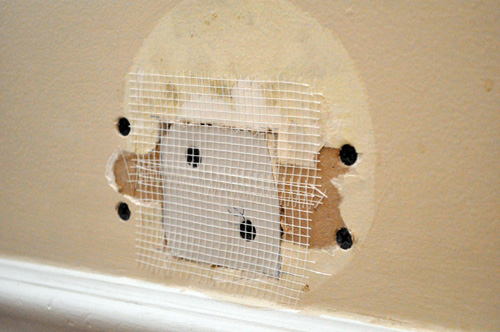
Check out the link. It'll show you lots more pictures. In short, I slip the backer board into the hole (holding it with that temporary screw) and screw it in place. Then I put the new piece of drywall in and screw that in place. -
It looks like the backer board is pretty big... long enough to extend beyond the hole so you can attach it to the old drywall.... but... How do you fit the board into the hole? Does it need to be long and thin? -
You're exactly right Linda. It's slim enough to slip into the hole. Really, it doesn't need to cover the entire hole, just provide a surface to anchor the new drywall. -
I did that to a medicine cabinet hole, It was much bigger and when I Finished it , It never looked like there was a cabinet in the wall.. Kinda cool looking at the finished work and knowing what a great job it was to complete. -
Another trick that I have used is to cut a picce of drywall 1" larger than the square hole. Strip the drywall from the front paper covering, 1" all the way around, that way the piece of drywall will fit in the square hole with the 1" paper covering overlaping the hole. The new piece can be held in place with a little compound on the overlapping edge. Then just cover with several coats of compound, sanding each coat as you go. This way you don't heed to install the backer board. -
This came at the perfect time! My husband is working on repairing a wall right now....I will pass this tip along! Thank you! -
Great tips. Thanks! -
After you click on the link, it just makes more sense...I've never tried this but have a hole in my ceiling where I moved a light fixture (w/popcorn)! It's been like that since 2005 and I've yet to muster up the guts to try this! Thanks though! -
Cut your square like stated in the above... and as you cut the wall bevel the edge abut 45 degrees so that the inside edge of the cut is smaller than the outside edge of the hole. Then bevel cut the insert drywall piece so so that the inside of the wall side is smaller than the outside edge... Insert like a puzzle piece, add your drywall tape, compound and finish. No screws, no backerboard. -
Supernewf that's called a hot patch, and while it can look good, it's not as durable of a repair. Hot patches rely on mud for strength, and you *might* see cracks form. -
Lynn Endicott, I've never heard that trick before. Have you ever had trouble making sure the bevel angles match or the new piece of drywall sitting proud from the wall? -
Maybe but I've never had a problem with it. So long as the hole isn't too big. Thanks for the feed back. -
Na... just wing it at about a 45 degree angle making the profile of the new patch piece look like a trapezoid. This keeps the patch piece from going into the wall... tape and bed and presto chango easy patch. Only reason that this might not work is if you are patching a hole where you need to hang something. I can not guarantee that something mounted on the patch would not pull the whole patch out. -
Don't forget to texture your patch to match the existing area around it. We have patched holes and replaces entire sections where one of our dogs tried to "dig" her way out of the laundry room. We didn't texture the patched areas and it really shows. That was in '98 and I'm finally getting around to texturing the area as part of my redo. -
Scrape the texturing off the area surrounding the hole , about 2 inches, to make it easier to feather the drywall compound. We had to redo 2 patches in another room because the original texturing was put on really thick and our hole turned into a bump no matter what we did. We then textured after the final layer of compound dried using Homex in a spray can. Final dteps were to prime and paint. Those 2 patches now can't be found. -
yes the link says it .....all step by step.... thanks !!!!