« View Post
Photos

Oops! Leave without saving?

If you leave this page, the information you have entered will not be saved!
Are you sure you want to leave this page?

Leave this page Stay on this page

Hometalk.com

  • Sign Up
  • or
  • Log In
  • Professionals
  • Community
    • All Members
    • Professionals
    • Bloggers
  • About
    • About Hometalk
    • Blog
    • FAQ
    • Guidelines
    • Resources
    • Support
    • Press
    • Contact
    • Terms of Use
    • Privacy Policy
  • Following
  • All Topics
    • Cleaning & Organization
    • Crafts
    • Design & Décor
    • DIY Projects
    • Gardening
    • Home Maintenance & Repairs
    • Outdoor Living
    • Painting
    • Remodeling
    • Repurposing & Upcycling
    See More Topics »
  • Questions
    • All Questions
    • Open Questions
    • Unanswered Questions
  • Clips
Post & Ask
Join Now Log In

Hometalk is where people share and help with everything home & garden

Yaron

Atlanta, GA
58 Followers 21Likes
  • Overview
  • Posts1
  • Q&A7
  • Comments22
  • Boards3
  • Clips27
  • Likes151
  • Following62
  • Send a Message

My Recent Boards

  • Yaron's Clipboard
  • Garden ideas
See All »

Featured Photos


Recent Activity


  • A ripened Celebrity tomato waiting to be picked from the vine.
  • The Brandywine heirloom tomato
  • Tomato products make up a large part of our canning pantry
  • The rich texture of the Brandywine
  • There is nothing like home made tomato juice
  • Tomatoes!
  • Good soil and a lot of sun make for a big crop!
  • See 4 more photos

All About Tomatoes - Growing, Eating and Canning!

Today's post is dedicated to our most beloved fruit- The Tomato! Yes, scientifically speaking, the tomato is a fruit, although we like so many others consider it a vegetable too :). No ...»
matter what you call them, tomatoes are delicious, nutritious and have thousands of uses fresh, frozen and canned - making them the perfect plant to grow in the garden!

Tomatoes are truly the most important crop we grow. Not just because we love to eat them - but because they are also the main ingredient in many of the canning jars we fill our pantry with each year from the garden. Salsa, pasta and pizza sauce, tomato juice, ketchup and sun-dried tomatoes are all canned each year from our tomato crop - providing us year round with great tasting food from the garden.

So what are some great varieties to grow? And what types do best for roasting, canning or eating fresh? Well, here is a little info to help you through tomato land:

Heirloom Varieties: The Perfect Fresh Tomato

There is a big push on today for heirloom tomatoes - and for good reason - they have amazing flavor, taste and texture. In general, heirloom tomatoes are old-time tomato seed varieties that are open pollinated, have been passed down from generation to generation - and have unique and special characteristics. Some of the more popular - like Brandywine, Black Cherry, Mr Stripey, Green Zebra and Lemon Boy - are grown and coveted by many gardeners for their intense flavor. They are the perfect fresh tomato for salads, hamburgers - or to slice and eat!

There are some drawbacks however to be aware of when growing them. They are not going to be as hardy as most of today's hybrid varieties that have been bred for higher yields and disease, wilt and bug resistance. Some gardeners who are new to growing heirloom varieties become disappointed when they plant a whole area of heirloom tomatoes - only to see them produce fewer tomatoes and die off earlier due to disease.

If you want to can and preserve in larger quantities - you will also want to plant some of today's newer varieties that have some disease resistance and higher yields. As an example - our La Roma sauce tomato that we plant for canning our salsa and sauces may be a modern hybrid, but organically grown, the taste is still light years above anything we could ever buy "fresh" in a store or supermarket.

Here are some of the hybrid and resistant varieties that we grow for canning and preserving:

Slicing:

The Celebrity and Rutgers are two great choices for a slicing tomato. They seem to always have perfectly round fruits that fill up a bun or sandwich. They also both have a great juice to flesh ratio. The Big Beef and Beef Steak varieties do well for slicing too.

Salad Tomato:

Everyone knows the "cherry" and "plum" tomatoes that have become so popular on salads, or for simply popping in your mouth to enjoy. There are hundreds of versions, but the "cherry 100" and "sweet 100" have always performed well for us.

Another favorite among tomato aficionado's is the Campari Tomato. It is a little larger than the cherry or plum types (about golf ball size), but it is super juicy with a high sugar content for great flavor.

We tend to grow our cherry and plumb tomatoes in large pots on the patio and keep them out of the garden. For one, they make a great potted plant and it makes it easy to pick them for salads or to eat. Second - the plants grow so large and produce so much - they are hard to keep control of in the garden. They also tend to overpopulate the ground below with hundreds of seeds that keep coming back the next year - making weeding and issue - and planted pots eliminate that.

If you do become overrun with a supply of them - they are great to add to your juicing operation. Although small, the high liquid and sugar content make them good for juicing.

Tomatoes For Tomato Juice:

Speaking of juice, we make and certainly go through a lot - usually to the tune of a couple of quarts a week year round. You can certainly use any tomato variety when juicing - but our favorite is to use a mixture of La Roma and Celebrity Tomatoes to create the perfect juice. The Celebrity contains a lot of juice and it is balanced with the thicker meaty style of the La Romas. The result, a really great tasting juice with good texture.

Sauces and Salsa's:

We can a lot of sauce and a lot of salsa - and for us, as we stated earlier - nothing can beat the La Roma tomato as the main ingredient. The plants are hardy, with thick and meaty fruits that cook down into a great sauce. The meaty texture also lends itself to a great salsa tomato. The chunks stay firm and meaty. Our La Roma Plants are big producers too - we grow 24 plants and usually harvest a good 30 to 40 pounds of tomatoes per plant.

You can see our recipes here for our Picante Salsa and Pasta Sauce.

Success In Growing Tomatoes:

You can check out our previous post on how to grow great tomatoes - but in general - tomatoes love sun and warm humid nights. They also need a fair amount of water - so make sure they are getting a good 1" of water per week. As an extra tip - make sure to add a few crushed egg shells to every planting hole. The added calcium will help to avoid black rot and wilt on your tomatoes throughout the season.

Happy Gardening - And Enjoy Those Tomatoes!

Mary and Jim

If you would like to receive our DIY & Gardening Tips every Tuesday – be sure to sign up to follow the blog via email in the right hand column, "like" us on Facebook, or follow us on Twitter

Old World Garden Farms
Old World Garden Farms Newark, OH
Post Comment | 118 Views
  • Yaron
    Clipped 15 hours ago to Garden ideas
  • Share 2
  • Like 5
  • Clip 6
Clipped to:
  • OUTSIDE
  • Garden Inspiration

Design & Décor

Design & Décor
  • Yaron
    Followed 1 topic on May 09, 2013
The Garden Stamp
  • Yaron
    Followed 1 person on May 08, 2013
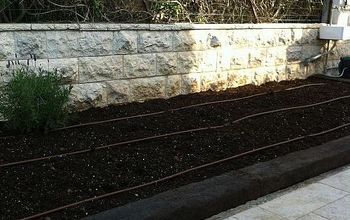
  • Before
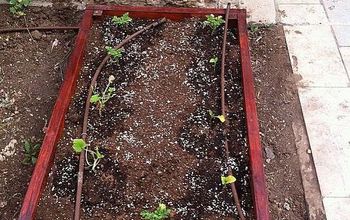
  • Looking forward for some yummy tomatoes

Vegetable garden

Here are a before photo of my vegetable garden and a photo taken this morning. I would like to thank all the wonderful hometalk members for the inspiration, support and advice that you have given me. I couldn't have done it well without you.

Yaron
Yaron Atlanta, GA
2 Comments | Post Comment | 206 Views
  • Yaron
    Commented on May 07, 2013
    Douglas Hunt Thanks!
  • Share 0
  • Like 6
  • Clip 2
Clipped to:
  • Gardening/Pl...

Gardening: zucchini question

Is it a problem that the zucchini fruits are laying on the ground? I am concerned that this way they are more vulnerable. ...»

Any preventive organic method I should use to prevent bugs?

Yaron
Yaron Atlanta, GA
3 Comments | Post Comment | 76 Views
  • Yaron
    Commented on May 07, 2013
    Old World Garden Farms Donna Dixson Walter Reeves would love to get your advice.
  • Share 0
  • Like 0
  • Clip 0
  • Just a few tomatoes from last years harvest. Looking forward to another great tomato harvest.
  • Transplanting your new tomato means finding the right container.
  • Be sure to squeeze the pot to loosen the plant. Never pull it out by holding the leaves.
  • Check out those healthy roots!
  • Plant the tomato up to the first set of lower leaves.
  • Be sure to water your newly transplanted tomato to reduce stress on the plant.
  • See 3 more photos

How to Take Care of Your New Tomato Plants

Learn how to transplant your tomato plants once you get them home and more info on tomato growing from a crazy tomato lover.
Deltagardener
Deltagardener Canada
1 Comment | Post Comment | 270 Views
  • Yaron
    Clipped on May 06, 2013 to Garden ideas
  • Share 1
  • Like 5
  • Clip 7
Clipped to:
  • Garden Decor
  • Garden Inspiration
Jeannie Scott
  • Yaron
    Followed 1 person on May 06, 2013
  • Weed Free gardens produce higher yields
  • Cover crops keep the soil from eroding and weed seeds from finding a home 2
  • Bare soil is an invitation for weeds and weed seeds to find a home.
  • A weed free garden is a healthy garden
  • Walking rows can be kept free of weeds without tilling by using mulch 2
  • The joy of fresh produce from the garden
  • See 3 more photos

6 Tips To Eliminate Weeds In Your Garden!

Weeds. The enemy of gardeners the world around! They are responsible for choking the life from vegetable and flower gardens, while stealing life-giving nutrients away from our plants. ...»
Weeds are also the reason many gardeners throw their hands up by mid-summer and call it a year.

It simply doesn't have to be that way. In fact, some of the most time-consuming chores we have been led to believe help with gardening and weeds - are actually the main culprit to creating more! Simply by eliminating those weed promoting practices, and replacing with a few time and labor saving methods - you can all but eliminate the issue of weeds in your garden.

We spend no more than 10 minutes a day handling all of the chores in our garden - including weeding - and that's not a misprint! The first step is realizing that eliminating weeds in a garden is a process and not a one time thing. But don't let that scare you - the process is simple and leads to a productive and beautiful garden in a fraction of the time.

Here are six ways we keep our garden weed free - and fun to be and work in!

TIP 1: Eliminate Bare Soil From Your Garden And Beds

Bare soil is at the root of most weed problems. Bare soil is an open invitation for blowing weed seeds to become established. By using mulches and protecting the soil, you can cut the potential for future weeds dramatically! We use a combination of mulches in our garden space to keep it covered. Straw and shredded leaf mulch in the walking rows, and a 2 to 3 inch mulching of compost right around our plants.

Just remember - open space is an open invitation for weeds and soil erosion

TIP 2: Resist the Urge to Dig and Till Your Soil:

This is the biggest time-saving AND weed saving tip we can give. Stop tilling the garden! In the time it takes a person to till between the rows of a garden the same size as ours, we have finished our 10 minute gardening work day, grilled out for dinner and are sitting on the patio enjoying a cool beverage! And while working that extra time tilling - that person also just replanted tens of thousands of weed seeds that will germinate in the coming weeks.

Tilling simply takes all of the weed seeds that are laying on the surface, where they may never germinate, and plants them into the soil. Tilling over time also can destroy your soil's structure, but when it comes to weeds - it's a prime reason gardeners have to spend so much time trying to eliminate them. It takes time, gas, and is a never-ending chore. Instead - heavily mulch your rows with grass clippings, straw, or shredded leaves - they keep weeds to a minimum and help add vital nutrients to the soil as they break down.

We believe in this one so much we actually have an entire post dedicated to it: Why Not To Use A Rototiller.

TIP 3: Don't Over Hoe Your Row

Here's another long time garden chore that used to take hours in the garden - and should take only minutes. Using a hoe to loosen the surface soil around the base and root zone of your plant is a great weekly practice. It provides air to the plant's base and allows nutrients and water to more easily reach the root structure. But that is the extent of what is needed - just a 3 to 5" light hoeing of the perimeter soil around the base of each plant. Leave all of the other space in your planting rows alone and simply mulch it! Over-hoeing creates the same issue as tilling - planting above ground weeds seeds back into the earth. All you need is a light hoeing immediately around the plants - it saves tons of time and labor, and eliminates replanting weed seeds.

TIP 4 : Start Practicing The Art Of Cover Crops:

Start cover cropping this fall. Cover crops really help eliminate weeds over time by protecting your bare soil over the late fall, winter and early spring months. They have obvious benefits to helping your soils vitality, but they also help to form a barrier for blowing seeds to enter and lay in wait. After a season or two of cover crops - you will be amazed how little weeds actually even appear in your garden. You can find more about cover crops here : Cover Crops In Your Garden.

Tip 5 : Keeping The Weeds Out Of Walking Rows:

Keeping weeds out of the walking rows between your plants is just as important to the health of your garden as it is the look. The answer - Mulch - Mulch and more Mulch! We use whatever we have on hand. Straw and shredded leaves work great to create a thick 3 to 5" covering between our planting rows. From time to time a few weeds will start to pop up - and we simply pull them on our daily trips through the garden. If they become thicker - we simply take the weed eater through the garden and mow them down to the grown and reapply a few more inches of mulch. It immediately looks great again and stays that way for weeks. It's so much quicker and better than tilling up that soil between your rows!

TIP 6: Practice The 10 Minute-A-Day Philosophy

I think there are a lot of skeptics when we say we spend only 5 to 10 minutes a day in the garden for maintenance. However, that is one of the biggest secrets to maintaining a weed free garden - actually spending that time in the garden each day! This may sound a bit crazy, but 10 minutes of daily work is not the same as spending 70 minutes once a week in the garden.

In fact, there is a huge difference between the two. If you let the garden go for more than a day or two - weeds and the problems they bring multiply and magnify. Roots get deeper, spread and multiply, and suddenly you feel overwhelmed. What takes 10 minutes one day can suddenly take 4 to 8 hours when it has been neglected for a week or two. And guess what? It's not fun anymore at that point.

We head into the garden every day and walk the rows. If we see a weed around a plant, we pull it as we go. Usually, once a week we will spend the time hoeing the area only around the plants - once again - the process just takes 10 minutes to do the entire garden. Another day, we spend the time putting down some extra compost mulch around the plants or straw or shredded leaves in the paths. That's it.

So there you have it - how we keep our weeds and workload to a minimum. And remember the reason most of us garden in the first place - to eat healthier and get a little exercise. This is a perfect 10 minute workout every day!

Happy Gardening! - Jim and Mary

If you would like to receive our DIY & Gardening Tips every Tuesday – be sure to sign up to follow the blog via email in the right hand column, "like" us on Facebook, or follow us on Twitter

Old World Garden Farms
Old World Garden Farms Newark, OH
34 Comments | Post Comment | 52901 Views
  • Yaron
    Commented on May 05, 2013
    Cheryl Thanks!
  • Share 6.8K
  • Like 188
  • Clip 213
Clipped to:
  • Garden Ideas
  • Gardening/cu...

Gardening: Tomato question

I planted my tomatoes with net & stick support so that the plant would grow straight up and to the sides. But some of the branches are growing outside of the support. Should I trim them or just let them grow?

Yaron
Yaron Atlanta, GA
5 Comments | Post Comment | 135 Views
  • Yaron
    Commented on Apr 30, 2013
    Thanks! Four Season Nursery & Landscaping (Donna) ...»
    , is there any special way to take them off or just cut them with gardening scissors as close to the trunk as possible?

    I also wanted to know if I am tying them correctly. I attached a photo.

  • Share 0
  • Like 1
  • Clip 1
  • Our stake a cage system in place early this year - it's also great at harvest time to be able to reach right in and pick!
  • Inexpensive, thick, super soft and flexible yarn is a great way to tie them up.
  • With the open cage and yarn – it's easy to tie them up and get at the tomatoes when its time to pick
  • The staking system makes it easy to pick and tie up tomatoes - and keeps your garden looking neat and clean!
  • See 1 more photo

Frustrated with staking or caging your tomatoes? Try this!

Over the years we have tried several methods of staking and tying up our tomatoes. We are now at the point of the gardening season that this has become vital. Our tomatoes are growing ...»
by leaps and bounds, and we didn't want to risk the plants becoming damaged by leaning over and touching the ground, allowing disease and infestation to occur.

This weekend we used our stake-a-cage method to support the tomatoes as they grow. No, we didn't find this on an infomercial, rather, we developed this method by pure accident. Last year at this time, we had just moved the chickens into their permanent home "The Coop" at the farm.

We had left over fencing wire from when we built the outdoor run, and we had large stakes that we had used to stake out the ground on which it now sits. With some wire cutters, u-nails, and a hammer to build the 'best of both worlds' method of staking up our tomatoes. We now have the support of a strong stake, but also the support that a sturdy wire cage provides.

The best part is that the cage is open in the front, allowing for the ease of tying up the plants to a broad area, along with the ease of picking the tomatoes without dealing with the hassle of reaching through a cage during harvest time.

We then use a super soft and bulky yarn to tie the tomato vines to the post/fencing system. This allows supporting only the vines that need an extra boost without damaging or constricting the fruits as they grow. We simply cut 12-18 inches of the yarn and wrap the piece around any area that may need it throughout the growing season. Not only is this a very inexpensive way to stake and tie up your tomatoes (we spent less than $3 for 86 yards of material), but there are other benefits as well. Your family members aren't missing their old, but favorite, t-shirts anymore, the pantyhose that you need for that fall wedding will still be in your dresser drawer, and most importantly, if your yarn is a green color, the garden ties are camouflaged in the background, allowing for a neat and clean appearance to your garden!

Old World Garden Farms
Old World Garden Farms Newark, OH
4 Comments | Post Comment | 4806 Views
  • Yaron
    Clipped on Apr 18, 2013 to Garden ideas
  • Share 25
  • Like 18
  • Clip 23
Clipped to:
  • Plants & Flowers
  • Gardening Tips
Loading
Back
to top
Feedback