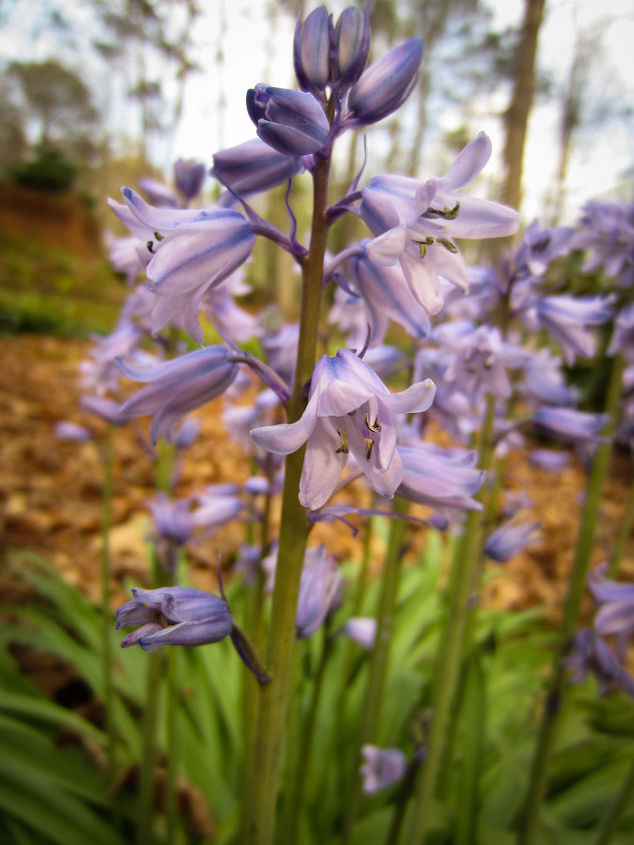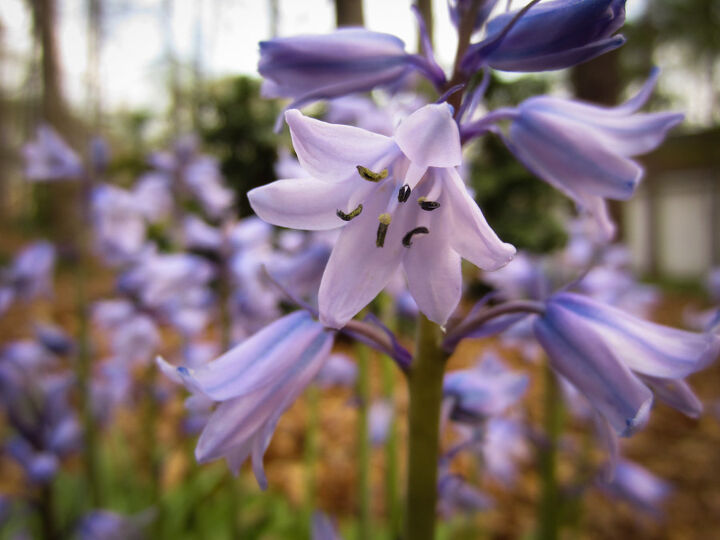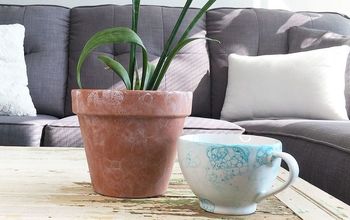
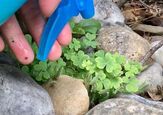

I have yet to be able to identify this flower. Does anyone recognize it? My mom's brother gave her some a few years ago, and I have never been able to figure it out.
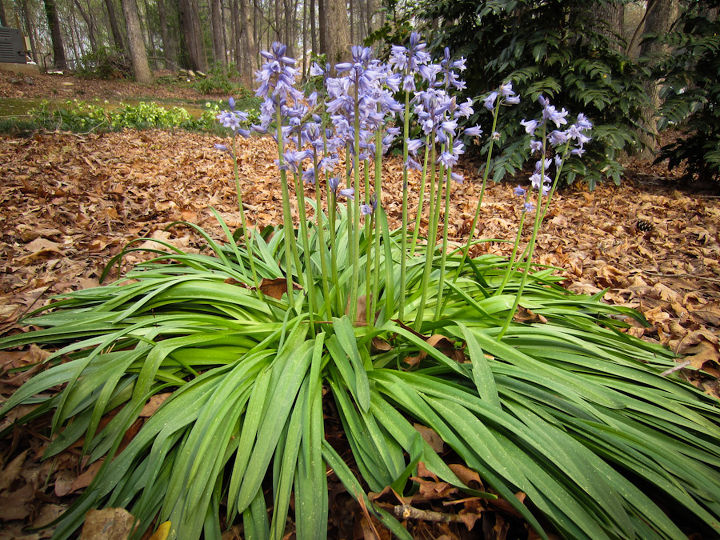
They are very easy to transplant and they multiply. Beautiful flowers, Spanish Bluebells! Thanks for the name, I have some that my husband transplanted but I didn't know the name of them.
They look beautiful in woodland areas - in the UK the Bluebell Woods around the country in the Spring are really worth a visit, it's like a carpet of purple/blue. They grow wild all around the country. Trying to recreate in my American garden - not quite there yet!
Coincidentally, I was walking through a client's wooded backyard this afternoon as we were discussing the first phase of installation projects, and scattered throughout the woods were lost of Spanish Bluebells. Granted, there was enough poison ivy to offset how attractive they were.
I think we are running into another case of where common names can become confusing. Looking in several reference books, it appears that Spanish Bluebells and Wood Hyacinth are names for the same perennial, Hyacinthoides hispanica.
For even further info, below is some information from Allan Armitage's Herbacious Perennial Plants book.
...»
"Flowers 6-12, petals strongly reflexed, pedicals (stems of individual flowers) not over 1/2" long." These would be English Bluebells (Hyacinthoides non-scripta)
"Flowers usually 12 or more, petals flared but not reflexed, flower pedicals to 1 1/2" long" These would be Spanish Bluebells (Hyacinthoides hispanica)
Armitage also states that "the two species, H. Hispanica, Spanish bluebell, and H. non-scripta, English bluebell, readily hybridize when planted near each other and many intermediate forms exist."
Also, sometimes pictures don't tell everything. Spanish bluebells are a spring bulb, like hyacinth and narcissus. The foliage dies after blooming. Hostas and liriope, which the picture does resemble, grow all season long and are staples of the summer garden. Liriope is usually around all winter and needs to be cut back before new growth begins. Identifying plants is like detective work or investigative reporting - lots of questions to ask and answer. I had these at my house when I
...»
moved here 20 years ago (and still do) but it took a while before I identified them through plant encyclopedia.
And yes, they will grow in WI cause I used to have them in WA and now they are thriving in central IL.
For even further info, below is some information from Allan Armitage's Herbacious Perennial Plants book. ...»
"Flowers 6-12, petals strongly reflexed, pedicals (stems of individual flowers) not over 1/2" long." These would be English Bluebells (Hyacinthoides non-scripta)
"Flowers usually 12 or more, petals flared but not reflexed, flower pedicals to 1 1/2" long" These would be Spanish Bluebells (Hyacinthoides hispanica)
Armitage also states that "the two species, H. Hispanica, Spanish bluebell, and H. non-scripta, English bluebell, readily hybridize when planted near each other and many intermediate forms exist."