« View Post
Photos

Oops! Leave without saving?

If you leave this page, the information you have entered will not be saved!
Are you sure you want to leave this page?

Leave this page Stay on this page

Hometalk.com

  • Sign Up
  • or
  • Log In
  • Professionals
  • Community
    • All Members
    • Professionals
    • Bloggers
  • About
    • About Hometalk
    • Blog
    • FAQ
    • Guidelines
    • Resources
    • Support
    • Press
    • Contact
    • Terms of Use
    • Privacy Policy
  • Following
  • All Topics
    • Cleaning & Organization
    • Crafts
    • Design & Décor
    • DIY Projects
    • Gardening
    • Home Maintenance & Repairs
    • Outdoor Living
    • Painting
    • Remodeling
    • Repurposing & Upcycling
    See More Topics »
  • Questions
    • All Questions
    • Open Questions
    • Unanswered Questions
  • Clips
Post & Ask
Join Now Log In

Hometalk is where people share and help with everything home & garden

James A

Roswell, GA
183 Followers 372Likes 2 Shares
  • Overview
  • Posts14
  • Q&A4K
  • Comments5K
  • Likes32
  • Following167
  • Send a Message

Posts


I just bought a new microwave.

The salesperson told me that I should never operate a microwave without something inside of it, as it would burn out the magneto in just a few minutes. Has anyone ever heard of this?
James A
James A Roswell, GA on Sep 21, 2011
13 Comments | Post Comment | 129 Views
  • James A
    James A on Sep 26, 2011
    Kevin! I like your response, that worries me.
  • Share 0
  • Like 0
  • Clip 0
  • Side of Allenbrook
  • National Park Marker
  • Front entrance
  • Original Shutters
  • Original Staircase
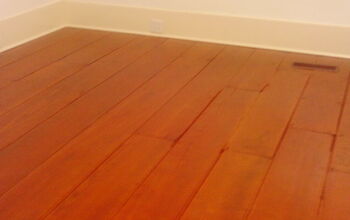
  • Ga Pine floors, 8-10" planks.
  • Fireplace in every room.
  • See 4 more photos

Went to visit a remodeled home from the 1850's.

It is in Roswell, GA in the National Park. The home is believed to be the residence of the mil, circa 1840's, that was located on the Chattahoochee River. Gray fabric generated from ...»
this mill was naturally gray, called Roswell Gray, and was used to make uniforms for CSA troops. The mill was burned by GEN Sherman in 1865 but the house survived. It has been remodeled and opened for tours.

James A
James A Roswell, GA on Jul 09, 2011
Post Comment | 89 Views
  • Share 0
  • Like 1
  • Clip 0

Flooring: Dropped a car jack on my hard wood floor.

Created a dent in it. About 1" x 1" and 1mm deep. Any ideas on a good repair without replacing section? Clear filler? Polyurethane?
James A
James A Roswell, GA on Feb 01, 2011
7 Comments | Post Comment | 28 Views
  • Darby C
    Darby C on Feb 01, 2011
    James, be sure to put up a before and after picture on this one.
  • Share 0
  • Like 0
  • Clip 0

My electric bill is much less because I fixed a leaky hot water faucet.

James A
James A Roswell, GA on Jan 29, 2011
Post Comment | 18 Views
  • Share 0
  • Like 0
  • Clip 0

Include the words, "sku#" in your search. Hopefully the shade is available on line. If not, set your

favorite local store online and search availability there. While there, copy the product number and go back to the website and search that number. I noticed that Home Depot had a Internet # and a Store SO sku.

James A
James A Roswell, GA on Nov 27, 2010
Post Comment | 28 Views
  • Share 0
  • Like 0
  • Clip 0
  • My old faucet was grungy and did not work well.
  • My water cutoff valves were easy to access in the cabinet under the sink.
  • There were many choices at the local home improvement store.  All shapes, designs and finishes.  i went with the one on sale!
  • Laying out all components before you start helps make sure all is there and helps get familiar with the faucet assembly.
  • I cleaned around the openings on the sink with very fine steel wool.  Household cleaner and a platic scraper also works well.
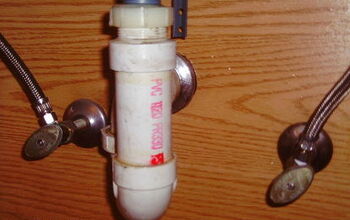
  • I disconnected the tw large plastic nuts and dropped the drain pipe out to install the new one.  Removing the flange was the most difficult.  WD40 was needed to unscrew the flange from the drainpipe.
  • No Leaks! I have a new faucet that works well.  I will be reminded of my success each day as I use my sink and new faucet!
  • See 4 more photos

Replacing a bathroom faucet

Replaced bathroom faucet and drain

* Cost Comments: ...»

May need a basin wrench ($12), Plumber's putty ($2) and teflon tape ($1)

*My motivation to do this project:

The faucet was old and did not work well.

*Project Steps:

First, I removed the old faucet. I turned off the water supply shutoff valves using the cutoff under the cabinet. I then opened the tap to allow the water to drain out of the lines and remove any water pressure.

I removed the hot and cold water supply lines running to the faucet with an adjustable wrench. I disconnected them at the faucet base since I was reusing the existing lines.

This was a faucet held in place by nuts located on the underside of the sink. I needed to get under the sink to remove them, and it was a bit of a squeeze. I did manage to get a wrench to loosen the nuts. So I did not need a basin wrench.

Once I removed the nuts holding the faucet, I just lift it up off the sink. I removed the old caulking and "grunge" that had built up around the old faucet. I used fine steel wool to remove most of it.

Next, I installed the New Faucet.

I laid a bead of plumber's putty then put the faucet in place. Then working underneath, I put on the washers and mounting nuts, and then hand tightened.

Once the faucet is firmly attached to the sink, I reinstalled the water feed lines using plenty of teflon tape on metal ends. I hand tighten these, then turned them ¼ turn with a wrench. I turned the water back on and checked for leaks. When cleaning, I made sure to clean up any plumber's putty around the faucet before it had a chance to set up.

The final job was to take off the aerator from your new faucet, turn on the tap and let water run for a couple of minutes to flush out anything that might be inside the faucet and ensure the new faucet ran clean.

Now, it was on to the Popup assembly and drain replacement. I loosened the retaining nut under the cabinet closest to the top. I then loosened the two large plastic nuts and removed the gooseneck from the drainpipe. I was able to free the flange from inside the sink but it would not turn. Finally I drilled a small hole in the flange, careful not to chip the ceramic sink. Then held a screwdriver in the drill hole to secure the flange while I turned the drainpipe underneath. After spraying with WD40 and scraping off all old putty and grange, it finally came off. I removed the lift rod and then reinstated the drainpipe into the gooseneck. I cleaned the drain hole in the sink very well and reinstalled the flange then the lift rod per supplied instructions.

No leaks, I was ready to go!

Advice:

The drain flange is sharp! Don't cut your fingers trying to screw it off. Do use a basin wrench if needed. Do have a bucket and towels ready at hand. Do have a flashlight handy. Do arrange all tools so that you can reach them easily when you are under the sink. Dont leave old putty on sink, clean new putty before it dries.

Materials:

1 X Faucet - $29.00

James A
James A Roswell, GA on Oct 09, 2010
4 Comments | Post Comment | 95 Views
  • James A
    James A on Nov 26, 2010
    New faucet works great. I did have a slow drainage problem. I realized that my stopper was ...»
    not raising high enough to let the water drain quickly. So, under the sink, I loosened the adjusting nut from the drain pipe to the the lift rod until the stopper was opened wider, and retightened the adjusting nut. It works fine now, easy fix.

  • Share 0
  • Like 0
  • Clip 0
  • Wide range of molding.  I chose quater round in a natural pine color to match to floor.  White was also available.
  • A miter saw and box is critical to cutting sharp, uniform angles.  This one was $8.
  • If walls were a straight line this job would be easy but it never happens.
  • Sharp edges where the cuts are seamless makes all the difference.
  • I pieced all the small pieces together before nailing.  Making sure all were there and they were cut correctly.
  • Used my old glue gun to attach the molding to the fireplace.
  • The molding tied the new floor and walls together well as a finishing touch.  A job I am proud of!
  • See 4 more photos

Quarter Round Molding

Adding quarter round molding around the baseboard

*Options I considered for this project: ...»

A contrctor could have done this faster but certainly not less expensively.

*Questions and unexpected events that arose during the project:

The number of cuts made on the miter saw. How confusing cutting angles.became. Getting up and down constantly was tiring.

* Cost Comments:

I had around 160 ft to be layed @ $.54 per ft. I chose the pine, natural color.

*My motivation to do this project:

New hardwood flooring had been laid. Adding this additional molding would cover some short cuts and improve overall appearence.

*Project Steps:

Installing quarter round molding along a straight line was no trouble at all. I simply measured the length of the wall on which you wish to install quarter round.

Marked a piece of quarter round molding at the desired length. Cut the length of quarter round molding along the pencil line. However, no room is straight lines. On outside corners, I had to cut a piece of quarter round molding to fit the wall, making it slightly longer than necessary so part of it sticks out beyond the wall where the corner is and mark the position of the corner on the back of the quarter round molding. Then I cut the quarter round molding using a miter saw set at a 45-degree angle, going from the outside to the inside of the molding. When encountering an inside corner, I had to cut the end of a piece of molding at a 45-degree angle. Measure the length of molding I needed, mark it and cut the molding with a miter saw, being sure not to cut the end on which I cut the 45-degree angle. I then fit the quarter round molding into the corner, cut side facing upwards. This sounds easy enough yet I made many mistakes and had to redo some pieces. Once all the molding was cut and set in place, making sure all pieces were cut correctly, I nailed the molding in at 12-inch intervals and punched in the nail head so that it is below the surface of the wood. I then puttied over the holes created by the nail punch to conceal them. Around the fireplace I used an old glue gun to attach the molding to the brick and floor.

Advice:

Do cut all pieces then lay them out before nailing. Do get a miter saw. Do get a small bench to sit on. Do buy a little extra quarter round for errors. Do buy the color you want to prevent having to paint.

Materials:

Quarter round - $86.00

Miter Saw - $9.00

Brads - $3.00

putty - $5.00

James A
James A Roswell, GA on Sep 17, 2010
8 Comments | Post Comment | 572 Views
  • James A
    James A on Dec 09, 2010
    Wow you can really use a miter saw.
  • Share 0
  • Like 0
  • Clip 1
Clipped to:
  • I <3 DIY
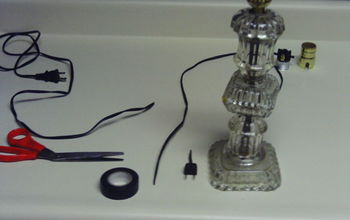
  • After disconnection the wires from the sockett.  I cutoff the old plug and taped the new cord end to it.
  • Taped the cord came through the rod easily.
  • I tied the end of the new cord.  A stripped off about 1/2".
  • I twisted the wires tightly and made to hook to attach to the terminals.
  • I replaced the socket and securely seated the cover.
  • See 2 more photos

Rewiring a Dangerous Lamp

Rewired a new power cord to the socket of a old lamp.

*Options I considered for this project: ...»

I could get a new lamp but this has been in the family for a while.

*Questions and unexpected events that arose during the project:

Is the socket cracked? Brass socket cover was difficult to remove.

* Cost Comments:

Often replacement cords can be found around the house. I save a few of them, for just such a chore.

*My motivation to do this project:

Safety. I use the lamp but it flickers when touched. Therefore, I thought I would rewire it..

*Project Steps:

First, I disassemble the socket after removing the shade and harp. There are three indentations on the bottom of the brass socket cover that when depressed will release the top half of the socket cover. I then fed the new cord through the center rod by disconnecting the old cord from the lamp socket, and cutting off the plug. I then attached the new cord to the old one with some black tape. The trick is to make the connection thin enough so it slides through the center rod. I pulled the new cord through as I withdrew the old one. I snipped off the old cord and tied a knot above the socket to keep the cord from going back down the rod, leaving about 2-1/2 inches of each wire to work with. I then stripped about a 1/2 inch of insulation from the end of each wire. I then twisted the strands tight with my fingers. Using needle-nose pliers to form hooks, I wrapped them around the terminal screws, tucking any loose strands in as you tighten the terminal screws. I then reassembled the lamp, the socket and install the harp. I put in a bulb, attached the shade, plugged in my lamp and there was light!

Advice:

Do unplug the lamp before working on it. Do push the new cord through not pull it, if you can.

Materials:

Lamp Cord - $4.50

James A
James A Roswell, GA on Sep 16, 2010
2 Comments | Post Comment | 256 Views
  • Christi H
    Christi H on Nov 25, 2010
    I have an old lamp that I just love but I've always been so scared to try to rewire it myself. ...»
    Is this a pretty easy DIY project? If it's not, lemme know and I'll bring it with me the next time I see you , lol. HAPPY THANKSGIVING!!

  • Share 1
  • Like 2
  • Clip 2
Clipped to:
  • Things Every Handyman S...
  • You Light Up My Life
  • Wide varietty of choices to find a match to yours at the home improvement store.
  • Gout and adhesive was relatively inexpensive.
  • A new or sharp chisel is critical for this job.  This 3-pack was less than $10.
  • This the severe crack down the middle of my tile.
  • This is the finished floor and the crack is not to found!
  • Closeup of repaired tile.
  • See 3 more photos

Replace a Cracked Floor Tile

Replaced a craked floor tile on my bathroom floor.

*Options I considered for this project: ...»

Covering it with a rug or getting someone to fix it. Decided to try it myself.

*Questions and unexpected events that arose during the project:

How solid a floor tile is. Difficult to get all pieces removed from floor.

* Cost Comments:

Many choices for replacement tiles out there. Great variation in prices. Pieces are available as srap at home improvement centers that might can be picked up and used if a leftover piece is not available

*My motivation to do this project:

The tile was cracked down the middle. Apparently something heavy had fell on it. It was an eyesore.

*Project Steps:

Luckily I had an extra tile left over from the original floor installation, and the tile to be replaced was full size, so no cutting was needed. I was never too successful in cutting tile without a water table saw. I removed the grout from the joints around the broken tile using the pointed end of the hand can opener. My crack was pretty severe so no additional scoring of the tile was needed. So I placed the chisel at the center of the crack, which ran down the middle of the tile, and pounded the chisel with the hammer to break up and remove the tile. Then I used the chisel and scraper to remove the remaining pieces of tile, grout, and adhesive. I then sanded the rough spots so the new tile would sit evenly on the floor. I applied the adhesive to the back of my replacement tile and on the sub floor. I wiggled the new tile into place. With a piece of wood, I gently tapped with a hammer to seat the tile. I then placed two pieces of masking tape over the new tile in an X shape to hold it in place and let it dry for 24 hours. After drying, I applied grout to the joints around the new tile with a putty knife then smoothed the grout in the joints with my finger. After waiting ten minutes, I cleaned off the excess grout from the tile with a damp sponge. The grout had to dry for 24 hours. I then wiped the new tile with a soft cloth to remove the grout haze. I now had a beautiful new floor with no ugly crack in one of the tiles. This was not that hard and something that really improved the room..

Advice:

Do allow plenty of time for drying. Do protect the tile from being walked on. While using the chisel, don't force a tile piece out as you may damage adjacent tile.

Materials:

Grout - $8.50

Adhesive - $6.00

Chisel - $9.00

James A
James A Roswell, GA on Sep 16, 2010
3 Comments | Post Comment | 299 Views
  • CjandAmy Dickerson
    CjandAmy Dickerson on Jan 16, 2013
    this is alittle like the problem i have but i have tile in my kitchen with the same problem ...»
    thanks for advice. I will be replacing tile this week now

  • Share 1
  • Like 1
  • Clip 2
Clipped to:
  • Tiling Tips
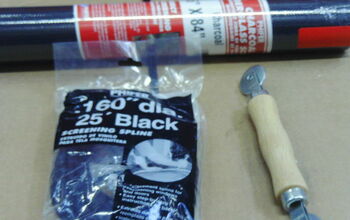
  • These are the basic materials used - Screen, spline and splining tool.
  • The Spline should be pressed deep with the tool and rolled to prevent buckling.
  • The adjustment two screws on the bottom raise and lower the door.  Door should be high enough to saty on track but low enough to slide easily.
  • The final step is to replace the handle and make sure the lock still works.  Bending the receiving latch can make it easier to lock.
  • The finished product is a nice fresh breeze coming through my place without bugs.  Plus my cat can now watch birds in the yard and cannot knock the screen out because it is properly adjusted.  Good job!
  • See 2 more photos

Sliding Screen Door Screen - Replacement and Adjustment

Replacing the screening material on the door and adjusting the sliding motion.

*Options I considered for this project: ...»

Leaving the door off, paying someone else to do it. I decided t odo it myself.

*Questions and unexpected events that arose during the project:

Keeping the screening material straight. Putting spline in with out buckling screening material.

* Cost Comments:

Screen material for a door is 36" by 84". Different quality of screen material is available.

*My motivation to do this project:

My cat knock the screen door completely off the track and it fell out on the patio! I now have to replace the torn screen and put it back on track more tightly.

*Project Steps:

I went to the home improvement store and looked at several types of screening material some of the most expensive was slow decay material and fine mesh to keep out smaller insects. I choose the black inexpensive roll which seemed to fit my budget and needs. I also purchased spline - a thin, spaghetti-like rubber that holds the screen material in place. Spline comes in many sizes, so I was glad I had brought some of the old with me. I also purchased a spline roller. I removed the screen door from its rolling track and cleared the dining room table to use as a flat working surface. I removed the old spline from the grooves and the removed the old screen fabric. I wiped out the channel that holds the spline with a q-tip. I centered the new piece of screen fabric over the opening, and begin rolling the spline into the groove, with the screen fabric under it. I taped the four corners of the screen to the frame. I worked my way around the door using the spline roller to make sure it was seated well into the channel. When done, the screen was tight. I cutoff the excess screen material with a box cutter, careful not to puncture the new material. I hung the screen door back on it's tracks and pulled the sliding screen door open and shut. The door did not run across the track smoothly and was sticking. I adjusted it by turning the bottom screws clockwise and after a few tries it ran without sticking, yet not so loose that my cat could knock it off the track. (Which he has done). Lastly I checked the latch to make sure it still worked.

Advice:

Don't cut the new screen when cuttinf off excess. Do have a big flt surface to work with.

Materials:

Screen Material - $5.50

Spline - $3.50

Splining Tool - $4.50

James A
James A Roswell, GA on Sep 16, 2010
2 Comments | Post Comment | 165 Views
  • Yamini LEED AP at Urbanmotifs
    Yamini LEED AP at Urbanmo... on Oct 28, 2010
    Kevin, Are these screen doors installed to a french door?
  • Share 0
  • Like 0
  • Clip 0
Loading
Back
to top
Feedback