« View Post
Photos

Oops! Leave without saving?

If you leave this page, the information you have entered will not be saved!
Are you sure you want to leave this page?

Leave this page Stay on this page

Hometalk.com

  • Sign Up
  • or
  • Log In
  • Professionals
  • Community
    • All Members
    • Professionals
    • Bloggers
  • About
    • About Hometalk
    • Blog
    • FAQ
    • Guidelines
    • Resources
    • Support
    • Press
    • Contact
    • Terms of Use
    • Privacy Policy
  • Following
  • All Topics
    • Cleaning & Organization
    • Crafts
    • Design & Décor
    • DIY Projects
    • Gardening
    • Home Maintenance & Repairs
    • Outdoor Living
    • Painting
    • Remodeling
    • Repurposing & Upcycling
    See More Topics »
  • Questions
    • All Questions
    • Open Questions
    • Unanswered Questions
  • Clips
Post & Ask
Join Now

Hometalk is where people share and help with everything home & garden

Stephanie @ Garden Therapy

Blogger | Canada http://gardentherapy.ca/
391 Followers 1.4KLikes 30620 Shares
  • Overview
  • Posts45
  • Q&A5
  • Comments59
  • Boards8
  • Clips188
  • Likes32
  • Following132
  • Send a Message

My Recent Boards

  • Garden Therapy
  • Fairy Gardens
  • A Wreath of Creativity
See All »

Featured Photos

About Me:

Creator of Garden Therapy, where DIY garden projects, yummy recipes and crafts are found all year.

Favorite area of home improvement:

Garden design, DIY projects using natural elements, cooking from scratch (that's home improvement right?!) and crafting for the home and garden.


Recent Activity


  • You'll need: mason jar or baby food jar with sealable lid, kitchen sponge, hammer and nail, heavy-duty string, sponge, sugar, scissors, saucepan and flower stickers or decorative tape (optional). 2
  • 1. Prepare "butterfly food" by mixing nine parts water with one part sugar. If you are using a mason jar for your feeder, use tablespoons, and if you are using a baby food jar, use teaspoons.
  • 2. Using a nail and hammer, punch a small hole in the center of the lid. A piece of a sponge will need to fit snuggly in the hole, so keep it small – you can always make it bigger if necessary.
  • 3. Cut a 1/2 inch strip from your sponge, then pull it through the hole in the lid so about half of the sponge is sticking out from the top – you'll want the sponge to be a tight fit.
  • 4. Before you tie any string around the jar, decorate your jar with brightly colored stickers, construction paper or washi tape. Flower shapes and bright colors are great options, because they'll imitate the real deal.
  • 5. Use your string to make a hanger. Flip your jar upside down. Tie some string around the neck of the jar (slightly below the lid).  Cut two more pieces of string that are about two feet long.
  • That's it! Now you can hang your feeder outside. It will work best if it's placed about six inches higher than your tallest flowers. 3
  • See 4 more photos

Make a DIY Butterfly Feeder in 6 Easy Steps

Don't underestimate the butterfly – it's more than just a pretty garden addition! There are 561 known butterfly species in the United States and Canada, all of which pollinate your ...»
flowers. Encourage butterflies to visit your yard and pollinate your plants by making a butterfly feeder. It's easy!

Full tutorial: https://brightnest.com/posts/attract-butterf...

Note: Some evidence suggests dyes may have negative health effects on humming birds. If you have humming birds in your region, we suggest making this sugar solon without dyes and making your jar extra colorful, instead!

BrightNest
BrightNest Denver, CO
9 Comments | Post Comment | 13407 Views
  • Stephanie @ Garden Therapy
    Commented 2 days ago
    great project!
  • Share 3.2K
  • Like 116
  • Clip 133
Clipped to:
  • Garden Therapy
  • garden & yard
  • There is nothing like fresh picked asparagus from the garden! 1
  • The first spear of Asparagus breaking through the soil. 1
  • In the first year, allow your asparagus to grow tall and wispy to generate good root growth. 1
  • Add a few inches of compost to your beds as a mulch each fall to keep them growing strong. 1
  • See 1 more photo

How To Grow Asparagus

There is nothing like having fresh asparagus from your own garden! Asparagus is just one of those crops that no matter how fresh it may look or feel in the supermarket - the taste of home ...»
grown can't be beat!

Asparagus is different than most of the vegetable crops planted in the garden. Unlike annual varieties such as tomatoes, cucumber and peppers that need planted each year - asparagus is a perennial. Once established, they can provide a good crop for 20 to 25 years for you and your family to enjoy!

They also differ because plants are either male or female. The males are known to have larger and more abundant spear production, while the female varieties tend to be thinner and produce seeds in the fall for reproduction. Most prefer to plant only the male for the added production levels. Popular male varieties such as Jersey Giant and Jersey Knight are great choices for those looking for maximum yields.

Asparagus can be started from seed or from what are called crowns - which are nothing more than the roots of 1 to 2-year-old asparagus plants. Most, (including us) really prefer starting them with the crowns and not from seed. Growing from seed can take up to 2 to 3 years to have edible spears formed - while starting with crowns can give you a few spears to enjoy by the second year. It's also easier to start and maintain the crowns - as their growth is more defined early on, making it easier to keep weeded.

How To Plant :

With the long crop cycle of 20 or more years - it is important to prepare your bed space accordingly. Work in generous amounts of compost to the soil before planting to provide a good starting base for your crop. Asparagus will do best in a nice, sunny location. They can tolerate some partial shade, but grow and thrive much better with full sun.

To plant asparagus, you will want to dig a trench about 6" deep and about 8" wide. We like to space ours about 18" between crowns. Place the crown at the bottom of the trench, and cover with about 2" of topsoil. As the crown begins to grow through the soil, keep adding a few inches of soil until the soil level has filled in the trench over the course of a few weeks. This process allows the asparagus to develop a deep root system to provide for years of crop harvests.

For your first year, allow the plants to grow tall. Resist the temptation to cut a few spears - you want all of the growth to go to the plant and root structure. In the fall after they have died off, you can cut them off about 1" above the soil and place a little straw or compost mulch over them for the winter.

In year two, you will begin to see some small spears shoot through the earth in the spring. You can harvest the first week or two of spears, then allow the plants to once again grow tall and build up strength. The year 2 spears will be smaller, but still very tasty!

Year 3 is where the fun begins! You should be close to full harvest - enjoying fresh spears each and every spring for many years to come. After each spring harvest, let your asparagus grow tall in the beds and repeat the process of cutting back after they have died off in the fall.

Upkeep and Maintenance of Beds:

The biggest key to good productive asparagus is to keep your beds weed free. Weeds and grass compete for valuable nutrients, and a weedy bed will result in smaller, less productive harvests. We use either straw or compost mulch to keep ours weed-free throughout the year. It's also a good idea each fall to put on a two-inch covering of compost on top of your beds to give some added nutrients. Other than that - once established, your asparagus beds will provide you with years of fresh and amazing tasting crops each spring!

Happy Gardening! - Jim and Mary

If you would like to receive our DIY & Gardening Tips every Tuesday – be sure to sign up to follow the blog via email in the right hand column, "like" us on Facebook, or follow us on Twitter.

Old World Garden Farms
Old World Garden Farms Newark, OH
35 Comments | Post Comment | 10860 Views
  • Stephanie @ Garden Therapy
    Clipped on May 07, 2013 to Gardening Tips
  • Share 1.6K
  • Like 79
  • Clip 134
Clipped to:
  • Plant Projects
  • Gardens
Jen, Girl in the Garage Shannon O- A Southern Belle with Northern Roots The Micro Gardener - Anne Thrifty and Chic The Pond Digger Hometalk HGTVGardens + 3 more
  • Stephanie @ Garden Therapy
    Followed 10 people on May 04, 2013
  • This handy jar is perfect for keeping twine from tangling!
  • Wind twine around a pencil or poke a pencil through a roll of twine
  • Cut out a cardstock lid and label it.
  • This recycled can jar sells for $12.
  • This twine dispenser sells for  $18!!
  • Twine can be used to decorate crafts like these citronella CANdles http://gardentherapy.ca/diy-citronella-candles/
  • Or to build a trellis: http://gardentherapy.ca/pea-trellis/
  • or to make a fresh wreath: http://gardentherapy.ca/making-fresh-wreaths/
  • See 5 more photos

DIY Garden Twine Dispenser

There are some really cool garden twine dispensers available at trendy shops like Williams-Sonoma and Terrain...but why pay the big bucks when this one is free?! Full instructions and ...»
uses for twine in the original post: http://gardentherapy.ca/garden-twine-dispens...

Stephanie @ Garden Therapy
Stephanie @ Garden Therapy Canada
11 Comments | Post Comment | 3629 Views
  • Stephanie @ Garden Therapy
    Clipped on May 03, 2013 to Mason Jar Love
  • Share 921
  • Like 79
  • Clip 106
Clipped to:
  • DIY
  • Repurpose
  • Stenciled Mason Jar Votive Holders
  • Supplies:  Mason Jars, paints, stencils, daubers.
  • Put your paint in old egg cartons.
  • Dab on paint and remove stencil
  • Add florist's wire for hanging. 1
  • Paint a few to give as a Mother's Day gift!
  • See 3 more photos

Stenciled Mason Jar Votives

This year, we really want our patio to be more of an extended living space. We bought some new furniture, and now I am ready to accessorize. I started by stenciling some mason jars with ...»
DecoArt's new patio paint and turned them into fun votive candle holders! #MayProjects

Easy
Mom4Real
Mom4Real Lexington, KY
9 Comments | Post Comment | 4477 Views
  • Stephanie @ Garden Therapy
    Clipped on May 03, 2013 to Mason Jar Love
  • Share 2K
  • Like 69
  • Clip 66
Clipped to:
  • Awesome Remodels
  • Garden Inspiration
  • See 1 more photo

Gardening: What do you know about Italian gardens?

I've heard a little about Italian Gardens...are there any fans or experts out there that can tell me more? What do you think of them and is it a style that is attractive to North Americans? Are they currently "hot" or "not"?

Stephanie @ Garden Therapy
Stephanie @ Garden Therapy Canada on May 02, 2013
1 Comment | Post Comment | 368 Views
  • Douglas Hunt
    Douglas Hunt on May 03, 2013
    The classic book on this topic is Edith Wharton's "Italian Villas and their Gardens." I spent ...»
    a fair amount of time in Italian gardens last summer and I think at their purest they are probably too rigid for North American tastes, which does not mean there are not ideas from them that could be happily incorporated here. Tracy di Sabato-Aust, whose "The Well-Tended Perennial Garden" should be on every gardener's bookshelf, has some ideas on her blog:

    http://www.tracylive.com/2008/10/lessons-fro...

  • Share 8
  • Like 4
  • Clip 3
Clipped to:
  • Yard & Garden
  • Garden Inspiration
  • How to Harvest Rhubarb
  • To harvest rhubarb solidly grasp the stem and twist to the side and pull to remove. Do not cut the stalks.
  • Trim the leaves in a fan pattern for storing in the fridge or  trim the tops completely if you plan to use the rhubarb right away.
  • Whether stalks are red or green doesn't affect flavour, but the red stalks are generally preferred to make the beautiful pink colour often associated with rhubarb desserts...
  • ...like this Rhubarb Sorbet Recipe: http://gardentherapy.ca/rhubarb-sorbet-recipe/
  • See 2 more photos

How to Harvest Rhubarb & a Sorbet Recipe mmmm

Rhubarb may be a hardy garden plant, but harvesting it the right way will produce the best tasting and most abundant stalks. Check out the full post for more on rhubarb and the right ...»
timing to harvest the plants. Plus there is a rhubarb sorbet recipe you will LOVE!

Stephanie @ Garden Therapy
Stephanie @ Garden Therapy Canada
5 Comments | Post Comment | 3646 Views
  • Stephanie @ Garden Therapy
    Commented on May 02, 2013
    Hi Barbara, I have listed full instructions for harvesting in the original post http://gardentherapy.ca/harvest-rhubarb/ ...»
    but the summary is this: Let a new plant grow for two years before harvesting any stocks and only take 1/3 of the plant on year three.

  • Share 977
  • Like 29
  • Clip 28
Clipped to:
  • Garden Therapy
  • Garden Inspiration
  • Simple make over with Krylon's Mirror Glass spray paint. 3-5 coats of paint make for a lovely vintage feel.
  • Bright succulents stand out against the mirrored surfaces of the jars.
  • Fast, simple, and a repurpose for something you might buy weekly!

Spaghetti Jars for the win!

Classico brand jars are rather adorable when you take the labels off! And they come in various sizes: pesto, pizza, alfredo, and marinara sizes.
Easy
TheCraftyWoman
TheCraftyWoman Vail, AZ
17 Comments | Post Comment | 8459 Views
  • Stephanie @ Garden Therapy
    Clipped on May 01, 2013 to Mason Jar Love
  • Share 1.3K
  • Like 92
  • Clip 99
Clipped to:
  • Gardening/cu...
  • paint and repurpose
  • Reach for the sky peas! That trellis is sturdy enough to hold you all.
  • Start by placing a row of bamboo stakes solidly in the ground. Weave another length of bamboo back and forth between the stakes. Repeat with another stake but alternating the weave.
  • Keep going until you have a complete and very sturdy trellis.
  • Train your plants up through the first few poles and then let them do their thing from there...these peas know what to do!
  • See 1 more photo

Making a Woven Trellis

It couldn't be easier to make a sturdy yet stylish trellis for peas, beans, or other climbing plants. This project uses just one material and takes very little effort and time. What could ...»
be better?! More information on how to choose the proper sizes and shapes for your plants in the full tutorial: http://gardentherapy.ca/woven-bamboo-trellis...

Stephanie @ Garden Therapy
Stephanie @ Garden Therapy Canada
17 Comments | Post Comment | 8428 Views
  • Stephanie @ Garden Therapy
    Commented on Apr 27, 2013
    Hi Josie, you can find them at most nurseries and hardware stores.
  • Share 1.1K
  • Like 73
  • Clip 80
Clipped to:
  • Garden Therapy
  • Gardening
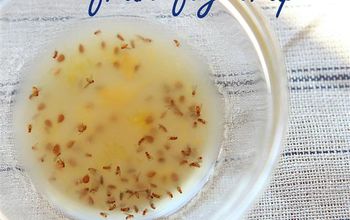
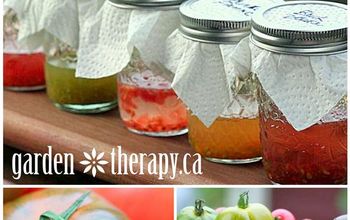
  • Step 1: pick out the very best tomatoes for seeds that will make the very best tomatoes. 1
  • Step 2: scoop the guts into a jar. Fill with 1/4 cup water and leave to ferment in a warm place.
  • Step 3: rinse off the seeds, dry and store for next spring.

How to Save Heirloom Tomato Seeds

Saving heirloom tomato seeds brings back those memories of science classes. The seeds can't be just scooped out and dried, they need to be removed with all the slimy tomato guts and left ...»
to ferment. A little gross factor and lots of fun makes this a great project to do with kids.

More information on this project at http://gardentherapy.ca/saving-heirloom-toma...

Stephanie @ Garden Therapy
Stephanie @ Garden Therapy Canada
21 Comments | Post Comment | 10941 Views
  • Stephanie @ Garden Therapy
    Commented on Apr 23, 2013
    Hi Renee, did they germinate when you tried to grow them? Because the fermentation stage is ...»
    necessary for tomatoes for the seeds to be able to germinate. Hopefully you got lucky though!

  • Share 627
  • Like 52
  • Clip 66
Clipped to:
  • Garden Ideas
  • gardening
Loading
Back
to top
Feedback