

Propagating Snake Plants: Leaf Cuttings In Soil
If you want a fun plant project, this may be the one. Sansevieria Care is one of our website’s three most popular posts, so I know you love them too. This is all about propagating Snake Plants by leaf cuttings in soil, including when, how, what you need, the time it takes, and care.
I propagate Snake Plants in two easy ways: by division and by leaf cuttings. Division is a fast method of propagation. Snake Plants like to grow slightly tight in their pots, so I leave mine be for long periods before dividing.
I propagate by leaf cuttings more often. This method takes time regarding rooting, but it isn’t hard to do. No worries, though; once the leaf cuttings have been planted, they’re on the way, and there’s not much to do.
Botanical Name: Sansevieria (many species and varieties) Common Names: Snake Plant, Mother-In-Law’s Tongue, Viper’s Bowstring Hemp.
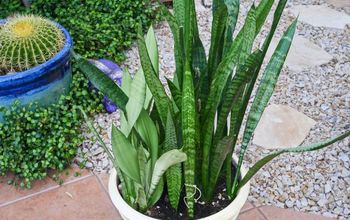
The Snake Plant you see me propagating here is a Sansevieria trifasciata, now named Dracaena trifasciata.

Propagating Snake Plants
Reasons For Propagating Snake Plants
The taller growing Snake plants have leaves that may pinch at the base and bend over time. This is the most common reason I propagate Snake Plants by leaf cuttings. If your plant is getting crowded, you may want to divide it and/or take cuttings.
They’re one of the most popular houseplants, so you may simply want more Snake Plants!
When To Propagate Snake Plants
The growing season is the best time for propagating Snake Plants. Spring and summer are the main times I propagate indoor plants. If you live in a climate with temperate winters like me (Tucson, AZ), then early fall is fine too.
If, for some reason, you have to propagate your Snake Plant in winter, no worries. Just know it’s not the optimum time. Mostly, I leave my houseplants alone in the colder months regarding repotting, pruning, and propagating.
Materials You’ll Need
- pruning tool – a sharp & clean knife, snips, pruners, or scissors
- small pot with at least one drainage hole
- a light mix like succulent soil
That’s it!

Soil For Snake Plant Cuttings
The best soil for Snake Plant propagation is a light and well-aerated mix with good drainage. You want the roots to form and grow easily and the excess water to drain.
A propagation mix or seed starting mix isn’t necessary, but a succulent and cactus soil mix is great. You can buy popular online brands Bonsai Jack, Superfly Bonsai, Cactus Cult, and Hoffman’s.
Here’s the DIY Succulent and Cactus Mix Recipe I’ve used for over four years for the propagation in soil method. It’s light and chunky, so those baby roots can easily grow. You can also use potting soil formulated for houseplants with pumice, perlite, coco chips, etc., added in to lighten it.

What Size Leaf Cuttings
The size is up to you. You can propagate the whole leaf or sections of the leaf. I propagate the whole leaf but usually cut it down a bit more after making the initial cut.
If you choose to cut and propagate leaf sections, it’s important to plant the part facing down in the soil. Otherwise, if you plant the part of the leaf facing toward the tip in the soil, it won’t root.

Where To Cut Snake Plant Leaves
Make sure you use healthy leaves. How many leaves you prune and propagate is up to you.
I cut them down to the base (an inch or two above the soil line) because it looks better that way. When that portion dies over time, I pull or cut it out.
I make clean cuts straight across the leaf, by the way.

Let the Leaf Heal Off
Snake Plant leaves are slightly fleshy because they store water. Like other succulents, it’s best to let the ends heal off (exposing them to air, just like we do with a wound) before planting to prevent any chance of rotting out.
I let my Snake Plant leaves heal off for a few days here in Tucson (the Arizona desert). When I lived in Santa Barbara (coastal California), it was up to 10 days.
Just be sure to keep them out of direct sunlight during this time.

The leaves are juicy when freshly cut!

Steps to Take When Propagating Snake Plant Leaf Cuttings
- Gather your materials.
- Fill the pot to almost full with the mix. A Sansevieria plant doesn’t need a big pot for propagation.
- Position the leaves in the mix, pressing them slightly into the mix. I don’t plant the leaves too deep – anywhere from 1-3″ down. You can see this in the 2nd half of the video.
- Fill in with a top layer of the mix.
- I stake it if a single leaf is too tall or heavy.

Where to Put the Cuttings
Put them in a bright spot. My leaf cuttings rooted in the kitchen near but not in a south-facing window. They received lots of bright indirect sunlight.
If in too much direct sunlight, they’ll burn. If not receiving enough light, the foliage will become stunted, and the Snake Plant cuttings will be weaker.
Snake Plant Cuttings Care
It’s easy. I’ll tell you how I maintained mine in the small 5″ terra cotta pot, and you can adjust yours for size, soil, and growing conditions.
I don’t water them for 3-7 days after the initial planting so they can settle in dry. After that time of settling in has passed, I water them thoroughly.
In the cooler months, I watered them every 2-3 weeks. In the warm months, it was every week.
Snake Plants can go dry. When it comes to leaf cuttings, I try not to let them dry out. Conversely, don’t give them too much water and keep them too wet, or they could succumb to root rot. This is where the light soil mix comes into play when propagating Snake Plants.

When New Growth Appears
The 1st baby in this pot appeared after approximately three months. The others followed in the next couple of months.
If you’re wondering, the leaves you initially propagate don’t grow; they stay as-is. The Snake Plant rhizomes produce all the new growth and send up the Snake Plants babies. You see more and more new growth as the young plants age.
In short, rhizomes are stems that grow underground. Babies are produced as they spread, and that’s how the plant grows.
Once They’ve Rooted & New Plants Have Grown
You have a few choices. Let them be as-is for a while, plant them into a bigger pot (one size up) if need be, or plant them in with another Snake Plant. The latter is what I did.
I watered both the bigger plant and the baby plant three days before I planted them together. After a week or so has passed, I resume the usual Snake Plant Care.

Propagating Sansevierias this way is easy, so give it a go. Be patient; those new Snake Plants will eventually appear!
-Nell Foster
JoyUsGarden
Snake Plant Propagation Video Guide

































Frequently asked questions
Have a question about this project?
Can you grow snake plants outside in full sun in summer and bring them inside in cold months?